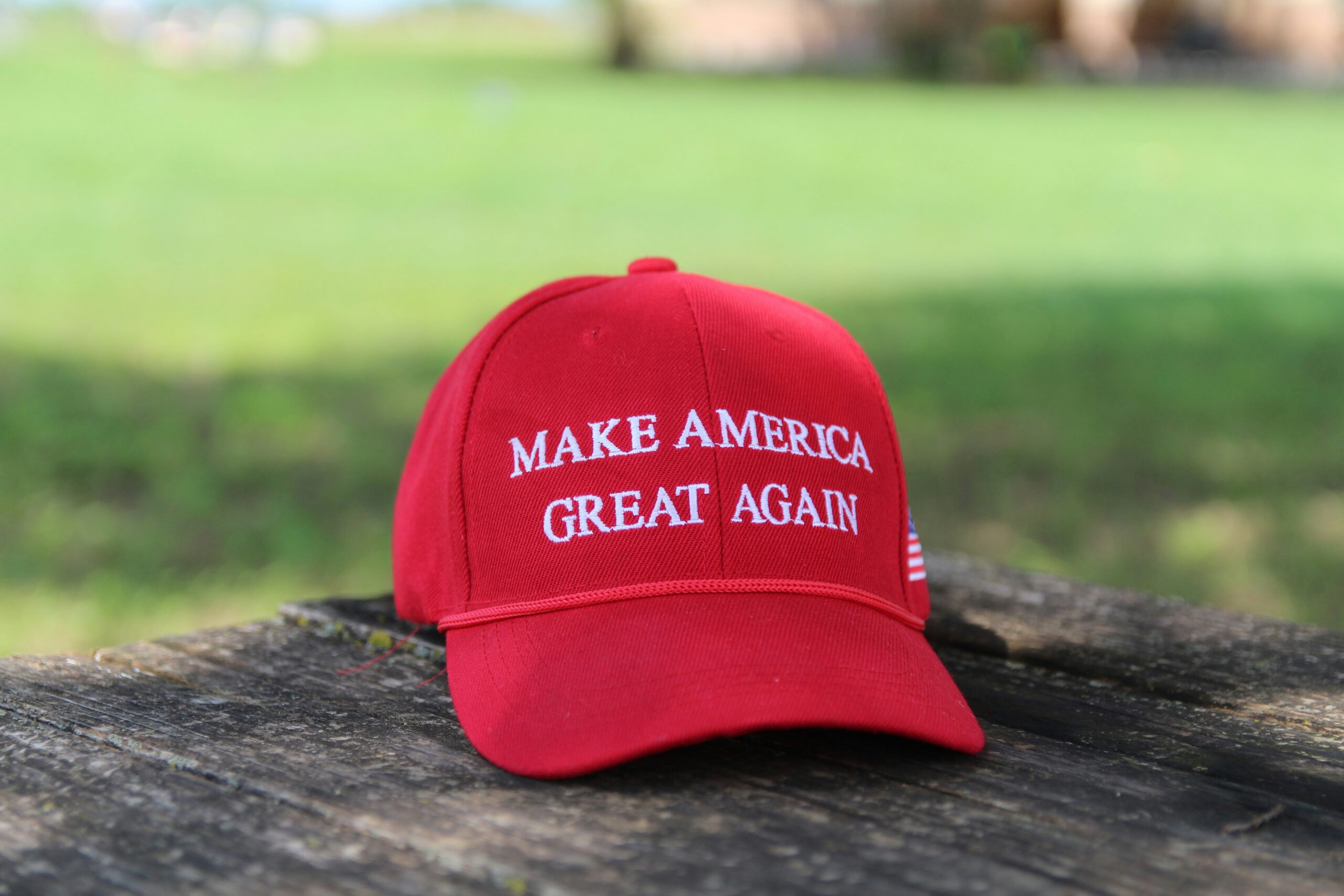
The grand promise Donald Trump made during his election campaign with “Make America Great Again” now echoes through recent global developments. Moreover, many countries facing political or economic turmoil project onto this campaign slogan a hope for justice or even a new international order. Yet when a state controls the levers on which others depend—data flows, resource routes, and global narratives—it gains a form of power that goes far beyond symbolism. Consequently, “great again” becomes not a promise of moral renewal but a claim to power that inevitably comes at the expense of others. In this logic, “great” simply means power.
Control Over Data
The digital infrastructure of the world is largely American, and this matters. Platforms, cloud systems, AI standards, communication networks, and financial data flows concentrate in the hands of a few U.S. corporations whose technologies create global dependencies. Because this system has no borders and no flags, it operates through protocols, servers, algorithms, and contracts. As a result, whoever controls this infrastructure also controls the decision‑making space of other states.
In earlier geopolitical eras, great powers needed physical presence—military bases, intelligence networks, embassies, and covert operations. Today, however, digital instruments are sufficient to influence political and economic developments. For example, an algorithm can shift the visibility of social movements, a sanctions signal can freeze financial flows, a cloud access point can expose state operations, and an export ban can halt entire industries.
Thus, digital dependence replaces traditional intervention.
States whose communication runs through American platforms operate in an environment whose rules they do not set. Consequently, the United States indirectly determines which content gains reach, which political actors gain visibility, and which narratives achieve international resonance. And when a country’s data is stored in U.S. clouds, Washington gains an informational advantage that once required extensive intelligence operations.
Therefore, technological dependence creates political vulnerability.
States reliant on U.S. software, chips, AI, or security standards can be pressured through export restrictions, update suspensions, or license withdrawals. This form of power is quiet but far‑reaching: it weakens governments seeking to protect their resources and strengthens those willing to open their markets. It also influences resource prices through trading algorithms and forces economically distressed states into agreements they would otherwise reject.
Ultimately, data does not replace resources—it is the instrument through which access to them is managed. In this sense, technological dependence becomes a modern form of geopolitical control: more efficient, more flexible, and more enduring than military presence.
Control Over Resources
The strategic importance of resources has not diminished; however, the methods of securing them have fundamentally changed. The United States no longer relies on colonial structures. Instead, it operates through a network of sanctions, bilateral agreements, military presence, corporate partnerships, and political influence. Together, these instruments allow Washington to access critical resources without exercising territorial control.
The Six Strategic Arenas of American Resource Policy
Venezuela—Oil as a Geopolitical Lever
U.S. policy toward Venezuela combines economic sanctions, diplomatic isolation, and control over international payment channels. These measures accelerate the country’s economic collapse and give Washington the leverage to reshape access to one of the world’s largest oil reserves. Moreover, the involvement of Chevron, Exxon, and ConocoPhillips in political discussions shows how economic and geopolitical interests converge.
Greenland—Rare Earths and Arctic Routes
Greenland’s importance stems from its rare‑earth deposits and its position along emerging Arctic trade routes. The Thule Air Base, NATO’s strategic posture, and the framing of China as a potential threat create conditions that enable the United States to expand its influence without formal control.
Africa—Lithium, Coltan, Cobalt
In Africa, the United States pursues a dual strategy: it participates economically in mining operations while simultaneously deepening security cooperation with governments. Loans, military aid, and partnerships function as tools to secure access to critical minerals. At the same time, Washington attempts to counter China’s dominance in processing and refining these materials by promoting alternative supply chains.
Pacific—Deep-Sea Mining and Maritime Resources
In the Pacific, the United States leverages the economic dependence of small island states to gain access to deep‑sea metals and fisheries. Through international institutions, bilateral agreements, and military presence, Washington influences licensing and regulatory frameworks. Australia frequently acts as a regional intermediary for American interests.
Arctic—New Routes, New Resources
Climate change is opening new shipping routes and potential resource fields in the Arctic. In response, the United States increases its military presence, engages in diplomatic negotiations over territorial claims, and expands systematic geological mapping. These measures secure long‑term strategic options in a region of growing geopolitical relevance.
Data—The Invisible Resource
Digital infrastructures now function as a resource category of their own. Through platforms, cloud systems, and technological standards, the United States shapes information flows, sets regulatory norms, and creates dependencies deeper than physical supply chains. As a result, data enables surveillance, market steering, and geopolitical influence—forming the foundation of modern resource policy.
Control Over Narratives
Control over information spaces has become a central instrument of American power projection. In a globally networked public sphere, legitimacy depends not only on military or economic strength but also on the ability to influence perceptions and frame political events in real time. Digital platforms, media networks, and algorithmic systems now function as tools that accelerate, moderate, or redirect political dynamics.
Thus, narratives have become geopolitical instruments.
In Venezuela, the systematic association of political actors with terms such as “drug trafficking” or “corruption” shifts international support and undermines domestic stability. Delegitimization happens not through military pressure but through the global reproduction of a specific interpretive framework. Iran further illustrates the link between information control and political stability. Internet shutdowns, censorship, and fragmented digital spaces represent responses to protest movements whose momentum is shaped by international media, social networks, and digital activists. The United States uses these information spaces to amplify protest narratives, increase diplomatic pressure, and restrict the regime’s political options.
The current U.S.–Iran escalation shows how modern power projection works: not through territorial intervention, but through economic pressure, digital influence, and strategic communication. Military threats serve less as instruments of escalation and more as tools of regional balance and deterrence. Meanwhile, tariffs isolate Iran’s economy, deter investment, and limit its foreign policy maneuverability. Cyber operations, support for opposition groups, and the disruption of state networks are openly discussed, highlighting that information spaces have become central arenas of geopolitical competition. Iran interprets these developments as a form of information warfare designed to influence political processes without physical presence.
Therefore, narratives are not secondary to geopolitical conflict; they are an independent instrument of power. They shape how events are interpreted, which actors gain legitimacy, and which political decisions receive international acceptance. In this logic, information control becomes a strategic factor comparable to economic or military measures.
The Misread Promise of American Power
As information spaces increasingly shape geopolitical outcomes, their influence becomes visible in how states interpret global power shifts. This dynamic is especially clear in many economically fragile countries. What Trump is doing today is not perceived as a threat there, but rather as a potential lifeline. States struggling with instability project their hopes onto the idea of a “great” America, convinced that a stronger United States might enforce a more predictable or even more just international order.
Consequently, sanctions, geopolitical pressure, or tough rhetoric toward larger regional actors are often read as signs that a powerful actor might finally rebalance an unfair system. Yet in the end, “great again” means only this: America sets the conditions, and everyone else must adjust to them. Whether the very states that see hope and justice in this promise truly want the consequences of such power is an entirely different question. Greenland certainly does not.
Explore more analyses in our Hidden Geopolitics category.