In the story of Greenland colonialism, one truth stands out: if you are not big enough to defend yourself, you are not treated as a subject but as an object. It is a brutal logic, yet it captures precisely how power operates. Size determines visibility, and visibility determines whether a people are recognized as political actors or reduced to exploitable resources.
Social Darwinism explains the world as a struggle; colonialism turns that struggle into laws, borders, and systems of ownership. The ideology provides the excuse. The structure delivers the violence. The world as struggle—what concept has shaped history more deeply than that? Yet why must powers enrich themselves at the expense of others? This is not a law of nature. Strength is not measured by standing on someone else’s back but by standing firmly on your own resources.
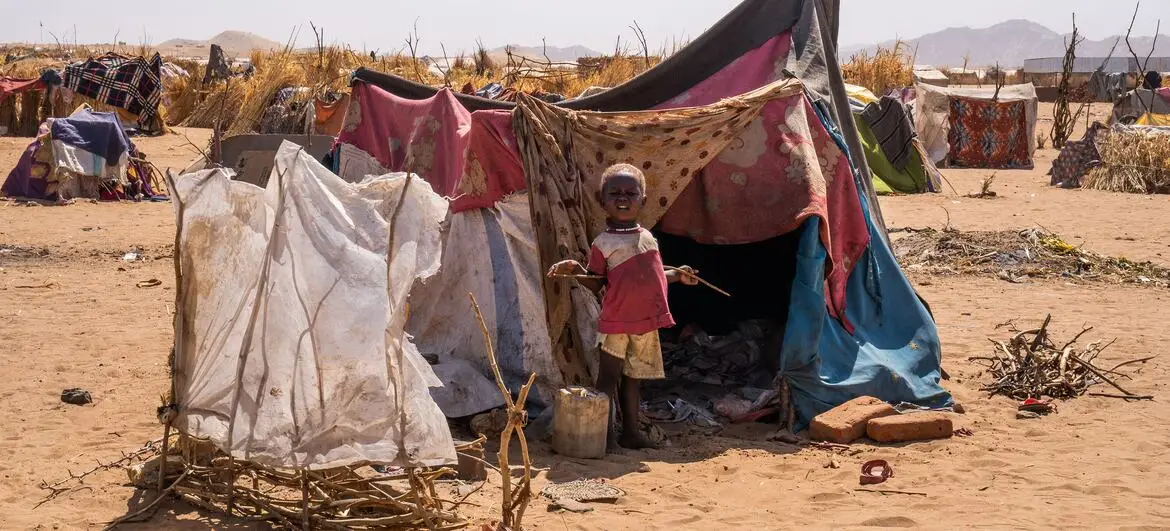
This logic is not confined to the Arctic. People fleeing war, poverty, or political collapse—often the consequences of global power politics—are rarely seen in the West as political subjects. They appear not as the harmed but as a burden. Here too, size determines visibility. And this very structure continues to shape Greenland.
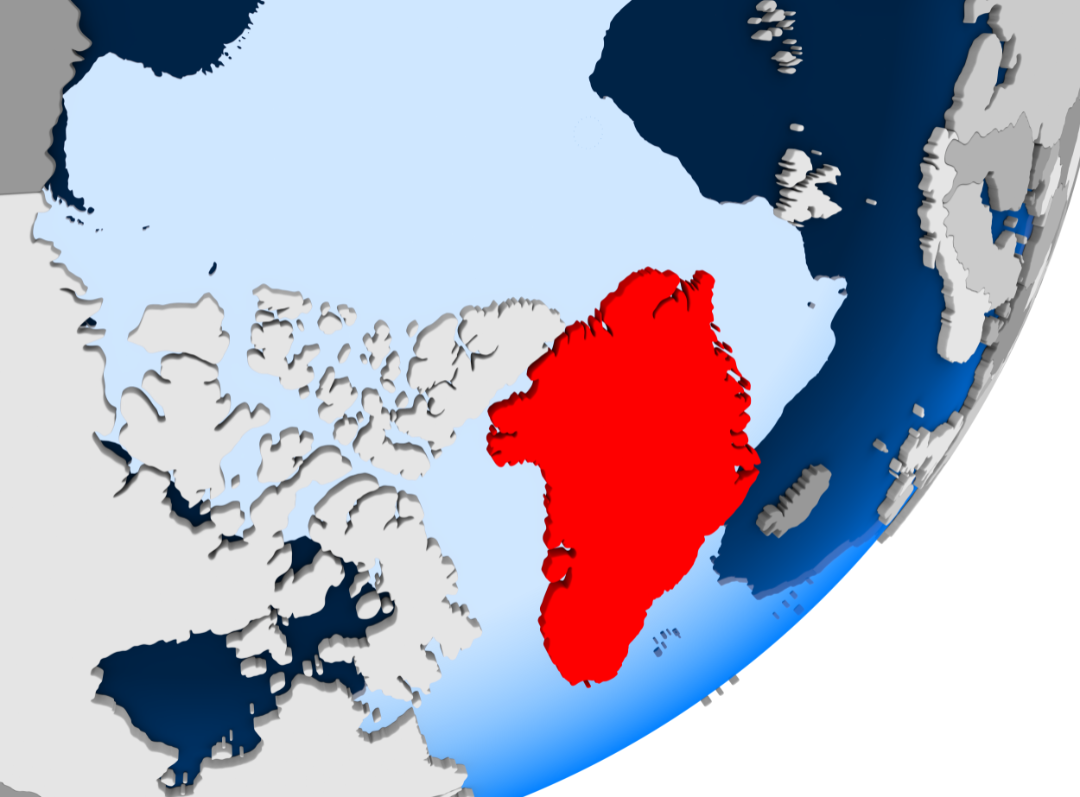
Greenland is not “Denmark vs. the United States”—it “is a colonized territory without indigenous self-determination.” When Western media discuss Greenland, they frame it as a geopolitical tug‑of‑war between two states. Denmark insists, It is ours. The United States declares, We want to buy it. But the people who actually live there—the Inuit—are absent from the conversation.
But Greenland does not belong to Denmark. It does not belong to the United States either. It belongs to the Inuit—and they were never asked. The Inuit have lived on this land for thousands of years, yet they have never been given the chance to decide their territorial future. They were colonized, administered, and integrated—but never sovereign. Their land is still negotiated by others.
The colonial continuity no one speaks about
Greenland’s history is a continuum of colonial rule—a truth rarely acknowledged because it disrupts Europe’s self‑image as a post‑colonial, enlightened space. When Denmark began its formal colonization of Greenland in 1721, the Inuit were never asked whether they wished to become part of a European kingdom. They were missionized, governed, and controlled—but never recognized as a sovereign people.
In 1953, Copenhagen unilaterally declared Greenland an “integral part” of the Danish state. Again, there was no referendum, no consultation, and no indigenous consent. The Inuit were not asked whether they wished to leave colonial rule behind or shape their own political future. They were simply written into the Danish constitution—a bureaucratic act marketed as “modernization,” but in reality a continuation of colonial authority.
In 1979 and again in 2009, Greenland received autonomy laws granting a local government and cultural self‑administration. But autonomy without land rights is symbolic. The administration changed hands—the territory did not. Denmark still owns the land; the Inuit merely manage it. As one Greenlandic activist put it, in essence, we have a government but not the land. And that is the truth almost no one dares to say aloud: Greenland was never decolonized.
A land rich in resources—and rich in foreign appetites
Greenland is one of the most resource‑rich territories in the Arctic. And it is precisely this combination—political dependency and economic desirability—that turns it into an object of global power. When Donald Trump announced in 2019 that he wanted to buy Greenland, Europe responded with ridicule. But behind the absurdity lay a colonial logic that remains intact. Trump repeated his interest later; Denmark called the idea “absurd,” and Trump threatened “other measures.” NATO diplomats openly spoke of “American imperialism.”
The deeper scandal, however, was this: throughout the entire debate, the Inuit were not mentioned once. The people disappeared; only the territory remained.
The colonial economy of the Arctic
The Arctic is no longer a pristine natural space—it is a global extraction frontier. Beneath the melting ice lie rare earths, uranium, oil, gas, new shipping routes, and strategic military positions such as the Thule Air Base.
A 2018 policy brief by the Danish Institute for International Studies (DIIS) describes Greenland as geopolitically and economically significant, especially in the context of Chinese investment. The U.S. State Department’s 2018 report on Denmark likewise emphasizes the Arctic’s strategic importance. Even corporate documents like Royal Greenland’s 2018 annual report reveal how the territory is framed in economic and geopolitical terms.
A detailed DIIS report from 2021 further expands this picture, documenting how Chinese state‑linked companies pursue mining projects across Greenland—from rare earths to iron ore—and how these investments intersect with U.S. and Danish security concerns. The report shows that Greenland’s mineral wealth has become a focal point of great‑power rivalry, with Washington, Copenhagen, and Beijing all seeking influence over future extraction pathways.
Taken together, the picture is unmistakable: Greenland is consistently treated as a strategic asset—a geopolitical commodity, even if the exact term is never used.
Climate change as a colonial accelerant
The faster the ice melts, the more resources become accessible—and the more aggressively global powers move in. For the Inuit, this means a double loss: they lose their ecological foundation and their political control. A fisherman from Ilulissat put it starkly: “The ice is disappearing. And with the ice, our control disappears.” Climate change is not only an environmental crisis. It is a catalyst for a new phase of colonial power.
The Arctic as a geopolitical stage
China now calls itself a “near‑Arctic state” and invests heavily in Greenlandic mines. Russia expands its military infrastructure in the North. The United States seeks to prevent both from dominating the region. Greenland is not a periphery. It is a chessboard. And the Inuit? They remain spectators in a game played over their land—but never with them.
The question that remains
Greenland does not merely reveal the story of a territory that was never decolonized. It exposes the architecture of a world order built on inequality—an order in which size determines visibility, and visibility determines who counts as a rights‑bearing human being and who is treated as a resource.
The Inuit are not victims of a natural law. They are victims of political design—decisions made by states that call themselves enlightened while treating territories as assets and peoples as footnotes.
Greenland reminds us of something fundamental: colonialism is not a chapter of the past. It is a system that persists as long as we refuse to name it. And as long as we refuse to name it, it will continue—in the Arctic ice, in future resource wars, in the borders that render people invisible.
The question is not whether Greenland will one day be free. The question is whether we are willing to build a world in which freedom does not depend on size.
Because true strength is not measured by standing on someone else’s back. True strength is measured by building a world in which no one can be made small enough to be prey.
Explore more analyses in our Hidden Geopolitics category.