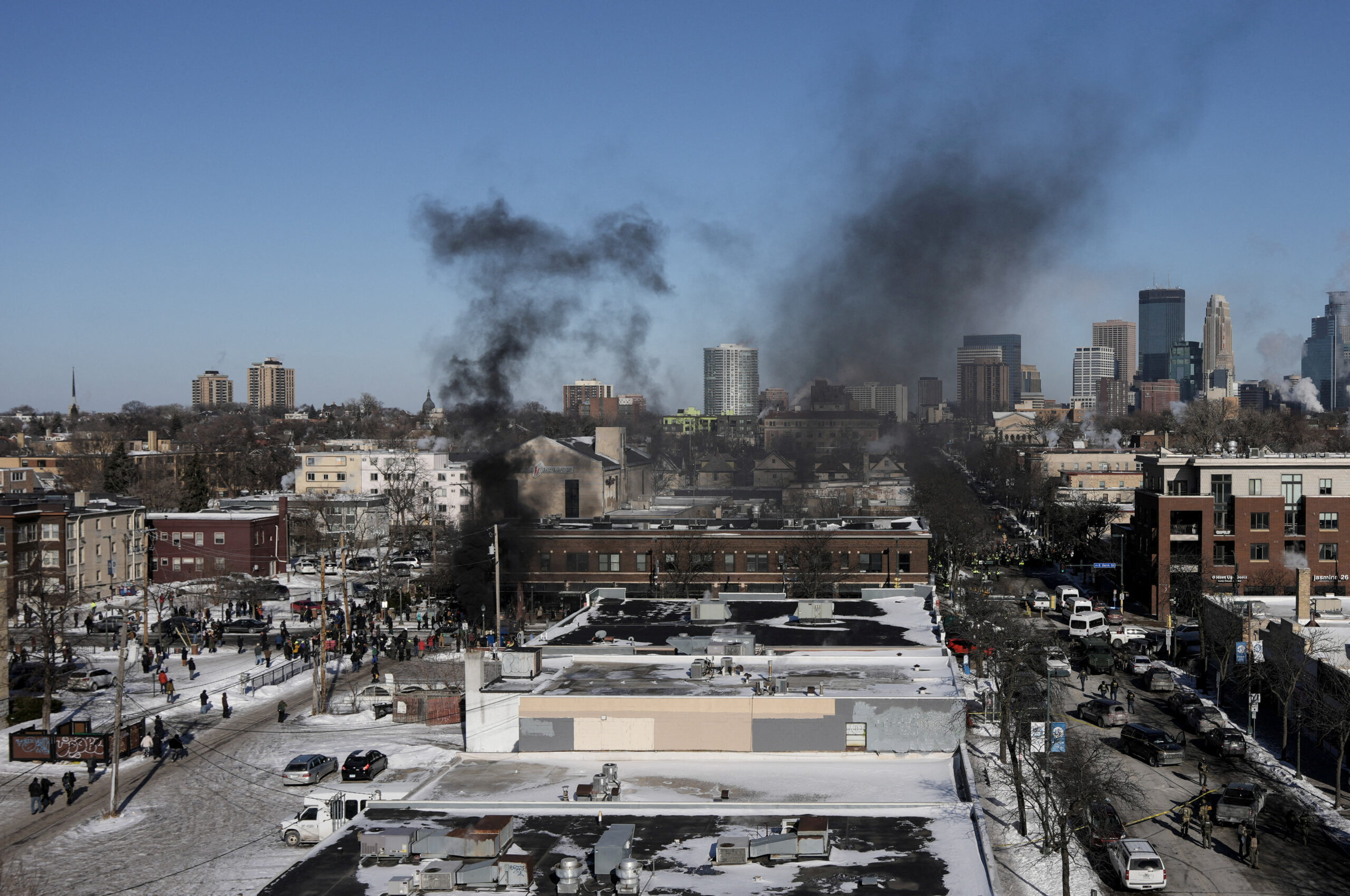
President Donald Trump expresses frustration with the Department of Homeland Security’s handling of federal operations in Minnesota after federal agents kill Alex Pretti. Journalist Aaron Parnas reports this on Substack, and several U.S. media outlets also confirm that Trump sends former ICE Director Tom Homan to Minnesota to oversee operations on the ground as criticism rises and nationwide protests grow.
On January 26, Minnesota asks a federal judge to halt the administration’s deployment of 3,000 immigration agents and describes the operation as a “violent and illegal occupation” that endangers public safety. Reuters reports that U.S. District Judge Katherine Menendez hears the state’s request after the second fatal shooting over the weekend.
The Contradiction Between Narrative and Verified Evidence
The central contradiction does not arise from political reactions but from the facts of the operation itself. The government claims that Pretti poses a threat, yet video footage shows he is unarmed when the shots occur. Officials insist he “violently resisted,” while the recordings show no sign of resistance. Major outlets including CNN, CBS News, NBC News, Reuters, BBC, and The New York Times document this discrepancy, and the Department of Homeland Security’s narrative does not align with the verified footage.
Migration, Economy, and the Structural Dependence of U.S. Cities
The deeper issue remains structural. The United States depends economically on migration while the political system frames migration as a threat. This contradiction rarely appears in public discourse because it is politically inconvenient: fear mobilizes voters; economic interdependence does not. Migration sustains American cities—but only as long as migrants remain compliant, invisible, or economically useful. The moment they assert rights, document abuses, or step outside the expected role of labor, the system treats them not as participants in society but as risks to contain.
The economic reality remains straightforward: the cities with high levels of migration drive the country. They generate the majority of federal tax revenue, sustain the national budget, and support the infrastructure on which the entire country relies. New York, Los Angeles, Chicago, Seattle, and Minneapolis grow through migrant labor, innovation, and entrepreneurship. Without migration, their economic output and tax contributions collapse. And without those tax contributions, the federal government does not exist in its current form.
This is where the deepest contradiction emerges: the United States funds its most aggressive immigration enforcement operations with the tax revenue of the very cities that cannot function without migration. While the economy depends on migrant labor, the political system treats migration as a threat—and deploys a federal agency whose most forceful operations occur precisely in the regions that finance it.
Enforcement Logic, Escalation Timeline, and Public Response
This contradiction shapes the enforcement logic that becomes visible in the Pretti case.
On the night of the incident, verified video footage shows an unarmed nurse assisting a woman on the ground while recording the ongoing operation. Seconds later, shots occur at close range. Before the footage becomes public, a DHS spokesperson states, “He posed a threat.” Shortly afterward, officials publicly label Pretti an “attacker.”
The incident appears isolated, yet it forms the visible endpoint of a trajectory that begins years earlier. Between 2017 and 2020, ICE’s authority expands. Between 2021 and 2024, operations increasingly shift into urban centers. By 2025, fatal encounters rise. And in 2026, the escalation reaches a point where the underlying mechanism can no longer remain hidden.
Official reports follow a recurring pattern: “resistance,” “noncompliance ” and “threat perception.” Yet in multiple cases, video evidence contradicts these claims. This discrepancy does not arise accidentally; it reflects the operational logic. In high‑pressure environments, officers do not assess threats—they presume them. Documentation, observation, or civilian intervention appears not as civic engagement but as interference.
The protests that follow do not erupt spontaneously; they respond to a structural contradiction. In Minneapolis, more than 40,000 people gather; in Chicago, around 25,000; in New York, over 60,000. The largest demonstrations occur in the country’s most economically productive regions—the same regions where migration is not viewed as a threat but as a prerequisite for growth.
The economic data remains unambiguous: cities with high levels of migration operate more productively, grow faster, and generate disproportionately high tax revenues. These revenues fund the federal government. The federal government funds ICE. ICE conducts its most aggressive operations in the very urban centers that finance it. This forms not a moral contradiction but a fiscal one.
The institutional architecture intensifies the tension. The federal government controls immigration policy; cities bear the consequences. DHS emphasizes after the incident that federal law overrides local policy—a reminder of the structural power imbalance between the federal government and the cities affected. That sentence captures the conflict more precisely than any analysis: the regions that generate the country’s economic strength hold no authority over the policies executed in their streets.
The historical layer deepens the contradiction. The United States emerges through migration—and through the displacement of Indigenous peoples. Today, the political system targets the very migration that sustains the economic foundation of its urban centers. The protest chant “This is not who we are,” heard in several cities, reflects not moral outrage but a clash between historical identity and contemporary policy.
The underlying cycle remains clear:
Harsh immigration policy strengthens ICE.
Strengthening leads to more aggressive operations.
Aggressive operations produce fatal incidents.
Fatal incidents trigger political escalation.
Escalation sparks nationwide protests.
Protests expose the divide between two Americas.
And this divide burdens the cities that keep the country functioning.
The Structural Question Facing the United States
The Pretti case does not represent merely a tragic event. It reveals a deeper contradiction: a nation that relies on migration economically but treats migration as a threat politically—and finances this contradiction with the resources of the regions that depend on migration the most.
The protests form the visible response to this mechanism. They respond not only to violence but also to an institutional logic that undermines the country’s economic foundations. The question that emerges remains structural:
How long can a government maintain an enforcement regime that weakens the economic centers that sustain its power.
Learn more about our mission: Make Injustice Visible
Make Injustice Visible — Injustice Chronicle
Great Again—but at Whose Expense?
“Great Again”– But at Whose Expense
Read more from our series on global power structures and systemic injustice: