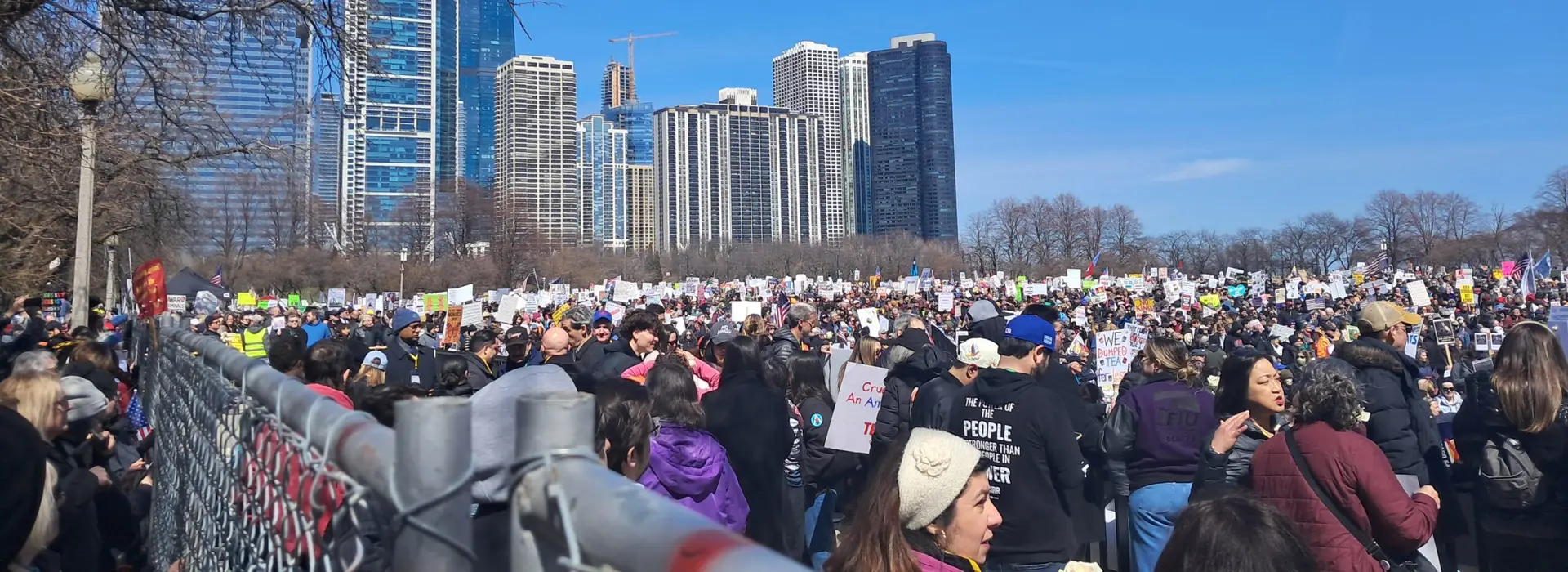
Millions of people in the United States are currently marching under the banner “No Kings,” rejecting the legitimacy of unchecked power. And people have hope. The call to “abolish Article 27”—a central chapter of my Equalism Manifesto, recently published and now available on Amazon—is also becoming more real with each passing day. But hope alone is not enough. Protest is essential, yet protest by itself does not dismantle the legal architecture that protects “kings” in the international system. Spain’s prime minister recently called for an end to the veto in the UN Security Council in the context of the war in the Middle East. These are not separate stories; they point to the same problem: a world order that still tolerates political kings at home and veto‑kings in New York. And once the veto is at issue, things become difficult—but not impossible. The veto is not a law of nature; it is a technical clause—Article 27 of the UN Charter—written by human hands and therefore open to revision or abolition. The “No Kings” mobilizations can thus become more than a national outcry against a single president. If those who reject a king in Washington also refuse to accept five kings in New York, at the Security Council, their protests turn into global pressure to abolish Article 27. This is the equalist logic: either the veto falls, or the Charter’s claim that all peoples are equal exposes itself as a contradiction and must be rewritten. Equalism shows how this is structurally possible: through amendments to the Charter, decisions of the General Assembly, advisory opinions, and a phased strategy that reduces institutional inequality step by step until the veto mechanism collapses with it. The following chapter of the Equalism Manifesto develops this argument in institutional detail.
Equal Power for Equal Rights
Equal rights are not enough; without equal power, equal rights remain hollow. Many states and many people already have the same rights on paper, but not the same power to enforce them. That is why Equalism does not stop at equal rights; it demands equal power.
When all states have equal power, no veto state can override the rights of others. When all people have equal power in their societies, no elite can decide alone about law, migration, or war.
Equal power means no veto over the decision to go to war, no veto over the right to asylum, and no veto over the protection of human dignity. Equal power protects equal rights. If power is concentrated in the hands of a few, rights serve the powerful. If power is distributed equally among all, rights serve humanity. Equalism is the claim: equal power for equal rights, everywhere, in every state, for every person.
Equal power also means dismantling the hidden spaces where “kings” are made. In a future without kings, every relevant file, procedure and decision that affects public power must be transparent by default. As long as decisions are made in closed rooms, power can quietly capture proceedings and turn one person into a de facto king over others. Radical publicity of procedures is not a cosmetic reform; it is a structural weapon against the silent accumulation of power. Equal power for equal rights means two things at once: no hidden procedures that create new kings in the dark, and no veto power that allows five states to overrule the rest of humanity.
Article 27 Abolition: An Institutional Analysis of the Vₙ = 0 Framework
The institutional design of the Security Council reflects a post‑1945 distribution of authority that embeds asymmetry into the core of its decision‑making procedures. Article 27(3) of the UN Charter grants five permanent members the ability to unilaterally block substantive resolutions. This mechanism was originally intended to stabilize the system by ensuring that major powers remained engaged. Over time, however, it has produced a structural pattern in which collective action is frequently constrained by the preferences of individual actors.
The resulting dynamic is not episodic but systemic. When the capacity to prevent institutional action is concentrated in a small subset of states, the Council’s ability to respond to crises becomes contingent on the alignment of interests among unequal participants. This asymmetry shapes both the frequency and the scope of Council interventions.
The Veto as a Structural Variable
The veto functions as a structural variable that influences the Council’s operational outcomes. Its presence introduces an inequality parameter into the decision‑making process. This parameter interacts with three additional variables — conflict dynamics , exclusion , and escalation — to produce a recurrent pattern of institutional inaction.
The relationship can be expressed as:
Inequality × Warfare × Exclusion × Escalation
This formulation conceptualizes the veto not as an isolated procedural tool but as a multiplier of systemic effects. As long as , the model predicts a persistent cycle in which institutional responses remain inconsistent or incomplete.
Reform Options Within the Charter Framework
A reconfiguration of Article 27 would require adjustments that reduce or eliminate the inequality parameter. Three institutional mechanisms have been proposed within scholarly and policy discussions:
- Abolition of the veto through a 9⁄15 qualified majority for all substantive decisions.
- General Assembly override, whereby a twothirds majority in the General Assembly becomes binding on the Council.
- Sunset provisions, limiting the duration of special decisionmaking privileges for permanent members.
These mechanisms aim to restore procedural symmetry. In mathematical terms, they reduce the inequality variable to zero:
Vₙ = 0 → I = 0 → no structural cycle.
A system without embedded asymmetry would be more likely to produce consistent institutional outcomes.
Legal and Procedural Pathways for Reform
The UN Charter provides a defined legal pathway for institutional modification. Article 108 authorizes amendments with a two‑thirds majority in the General Assembly followed by ratification. General Assembly Resolution 76⁄262 (2022) introduced mandatory debate following any veto, establishing a procedural precedent for transparency and institutional review.
This resolution represents the first formal mechanism linking veto use to broader institutional scrutiny. It demonstrates that procedural innovation is possible within the existing Charter framework. Additional proposals — such as voluntary veto‑restraint initiatives and advisory opinions on the scope of veto authority — indicate that reform discussions have already entered the domain of legal and institutional analysis.
The Equalism Model as Analytical Framework
The Equalism model conceptualizes institutional stability as a function of power equality. It treats the inequality parameter as the central determinant of systemic outcomes. When is removed from the decision‑making structure, the model predicts the collapse of the self‑reinforcing cycle:
Vn=I⋅W⋅E⋅S
I = 0 → Vₙ = 0
This framework does not prescribe specific political outcomes; rather, it provides an analytical lens for understanding how institutional asymmetries shape systemic behavior.
Phased Implementation Strategy
A phased approach aligns reform efforts with existing legal and procedural mechanisms:
- Phase 1: General Assembly review of Article 27 and its operational implications.
- Phase 2: Advisory opinion on the legal scope and limits of veto authority.
- Phase 3: Charter amendment vote under Article 108.
- Phase 4: Transition to a decisionmaking structure based on procedural equality.
This sequence reflects the institutional steps available within the Charter and avoids extralegal pathways.
Conclusion
Institutional systems built on unequal decision‑making authority face inherent limitations in their ability to deliver consistent collective outcomes. Reducing the inequality parameter to zero is not a normative claim but a structural observation: decision‑making symmetry is a prerequisite for predictable institutional performance. Reform of Article 27 would align the Security Council’s procedures with the principle that equal rights require equal procedural standing.