The United States feels the Iran war at the gas pump like everyone else—the global oil price knows no borders. But higher prices are only the first step toward scarcity. When it comes to real shortages, the US is in a far better position than most. Europe and large parts of Asia rely directly on oil and gas from the Gulf, while the US has domestic production, imports from Canada, andnow once again easier access to Venezuelan crude after easing sanctions.
The price shock is global; the physical shortage hits others harder. This asymmetry reveals who is truly vulnerable in our so‑called “world order”—and who can afford to wage wars without bearing the same existential risk.
If we accept these asymmetries, we accept a world order where some states can afford to launch wars, while others can only hope not to be crushed by the consequences. The central question is therefore not just whether Iran is “overreacting” or the US is “acting tough,” but who claims the right to hold the global economy and the lives of billions hostage in the name of “security.”
An order in which veto powers and control over strategic resources are concentrated in a few hands will keep producing crises—from the war in Ukraine to the blockade of the Strait of Hormuz. If we do not equalize this power, the same actors will go on deciding wars that everyone else has to pay for.
Breaking news: Oil spikes, Hormuz weaponized, millions displaced
As of today, several key facts define the current phase of the war and the Strait of Hormuz crisis:
- Brent crude briefly topped 100 dollars a barrel on Thursday, just days after spiking close to 120 dollars, as Iranian attacks on shipping and regional energy infrastructure rattled global markets.
- Even a record release of emergency oil reserves by major consuming nations has failed to calm prices, because traders fear a prolonged disruption of physical flows rather than a lack of barrels in storage.
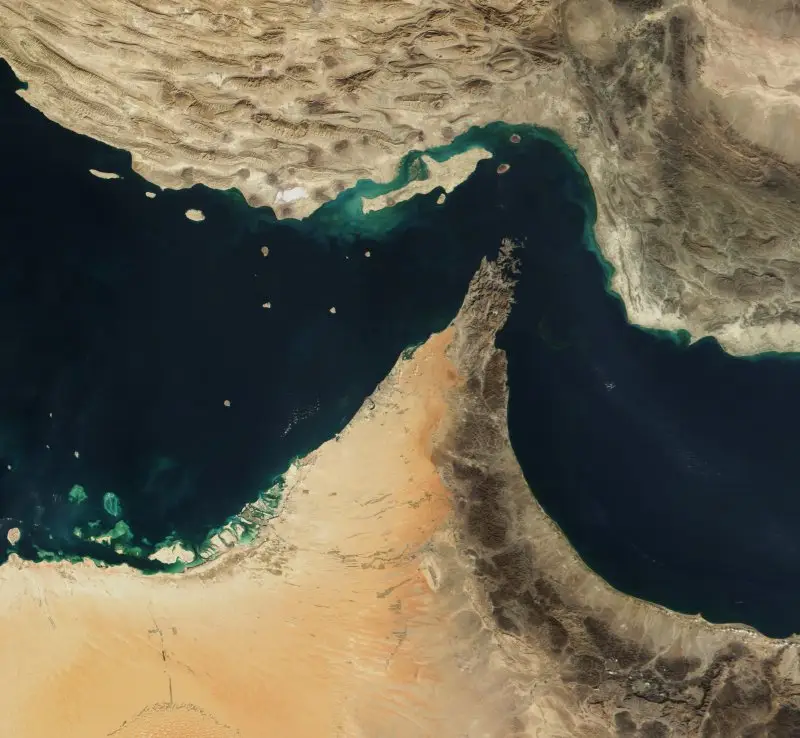
- Iran has followed through on its threat to weaponise the [Strait of Hormuz], targeting commercial vessels and signalling that closing the choke point is now on the table; multiple ships have been struck or damaged in and around Hormuz and the wider Gulf in recent days, forcing crews to abandon burning vessels.
- In his first statement since the war began, Iran’s Supreme Leader Ayatollah Mojtaba Khamenei has explicitly said that the leverage of closing the Strait of Hormuz should be used and that attacks on Gulf Arab neighbours will continue, while calling on Gulf states to “shut down” US bases and describing promised US protection as “nothing more than a lie”.
- On the ground, the human cost is exploding: the UN refugee agency estimates that up to 3.2 million people have already been displaced inside Iran since the conflict started, with many fleeing Tehran and other major cities toward the north and rural areas, and Israeli operations are pushing civilians in southern Lebanon to leave their homes as well.
The Strait of Hormuz has become the most visible wound in a global system that calls itself a “security architecture”—but in practice is an architecture of organised vulnerability, where a few actors can decide when the world’s economic bloodstream will be squeezed.
Who is most exposed: a global price shock, an uneven shortage
The Iran war and the Hormuz crisis hit everyone through prices—but they do not hit everyone equally.
- Energy market analysts highlight that Asia and Europe are most exposed to disruptions in LNG and crude flows if Hormuz remains closed: more than 90% of Qatar’s LNG exports and around 20–25% of Asia’s overall LNG supply transit this narrow waterway.
- Countries like China, India, Taiwan, and South Korea, and European states that replaced Russian gas with Middle Eastern imports, face the risk of direct supply shortfalls if the crisis persists.
- The US, by contrast, has robust domestic output, pipeline access to Canada, and, after Washington’s decision to ease sanctions, renewed access to [Venezuelan oil]—officially to “stabilize markets” and support reconstruction of Venezuela’s energy sector.
In other words:
- The price shock is global and unavoidable.
- The physical shortage is uneven and hits Asia and Europe much harder than the United States.
This is not an accident. It is what an unequal energy and power architecture looks like in practice.
Iran’s weak hand and the logic of asymmetric warfare
On the battlefield, the roles are clear: the US and Israel hold overwhelming air power, precision weapons, intelligence capabilities, and global logistics. Iran is weaker in conventional terms and therefore turns to asymmetric tactics—missiles, drones, attacks on tankers, and the threat (or limited use) of naval mines.
If Iran does nothing, Washington can declare the war “won” and rising fuel costs a “necessary, temporary sacrifice.” If Iran uses the only leverage it really has—the ability to disrupt traffic through Hormuz—it is immediately branded as “irrational,” “terroristic,” and guilty of “blackmailing the world economy”.
But step back for a moment and ask the question almost no mainstream editorial dares to ask:What would the United States do if it were in Iran’s position—outgunned, under heavy bombardment, facing regime‑change talk, with millions displaced, and with one major card to play: control over a choke point that carries a fifth of the world’s energy?
We do not have to imagine everything from scratch. Donald Trump is already telling Americans that the US has “won” the war against Iran—even as Iranian forces hit tankers and ports across the region overnight and the conflict keeps widening. US allies openly admit they do not understand what the strategic objective of this war is, beyond punishment and spectacle, while Pentagon leaks suggest it has already cost over 11 billion dollars in its first week alone. In parallel, Iran‑aligned hackers have launched their first known cyberattack against a US company since the conflict began, signalling that asymmetric moves will not stop at the Strait of Hormuz.
When a president can declare victory while the war is still escalating, it is not because reality has changed—it is because the architecture allows him to externalise the real costs onto others: allies, civilians, and the global economy.
Raising this question does not mean defending the Iranian regime or its internal policies. It means exposing the logic of a system that pushes weaker states into dangerous asymmetric strategies, because the official “security order” offers them neither equal voice nor effective protection.
A world order of organized vulnerability
The Strait of Hormuz crisis is not a freak event. It is the predictable outcome of a world order in which:
- A small group of states concentrates military superiority, control over key finance and energy infrastructure, and veto power in bodies like the UN Security Council.
- Other states hold only a few high‑risk levers—choke points, proxy networks, or crude asymmetrical tools—to force the powerful to pay attention.
In this order:
- A war between a bloc and a regional state can push global markets into crisis,
- expose whole continents (Asia, Europe) to energy shortages,
- displace millions and kill thousands,
- without any democratic, equal mechanism in which those most affected have a meaningful say in whether the war is fought and how it ends.
This is where Equalism comes in.
Equalism: Who has the power to do this—and who doesn’t?
Equalism begins with a simple question: Who has the power to decide over war and peace, over choke points and sanctions, over prices and shortages—and who is reduced to paying the bill and burying the dead?
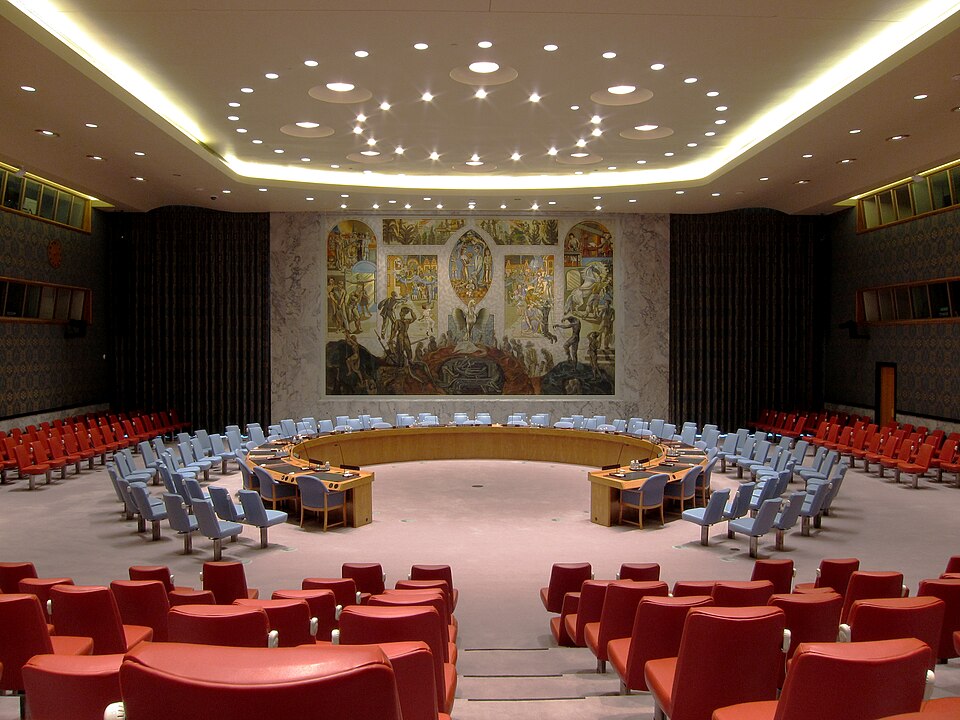
The 1945 world order handed five permanent members of the UN Security Council a veto over any resolution on war, sanctions, or ceasefire, regardless of how many states oppose them or how many people suffer. At the same time, it never created a structure in which those who bear the costs of wars and blockades—from Gaza to Ukraine to Hormuz—have equal power to prevent or end them.
Equalism argues:
- As long as veto power, military power, and control over critical nodes like Hormuz remain in the hands of a few, “peace” is just the pause between crises.
- As long as the architecture of power is unequal, every war doubles as a tool of dominance and a stress test: how much suffering can the world absorb before it questions the system itself?
The Iran war, the Hormuz blockade, the Gaza catastrophe, the war in Ukraine—these are not isolated “tragedies.” They are different faces of the same structural problem.
From critique to blueprint: Abolish veto power, equalize power
Equalism is my attempt to turn this diagnosis into a concrete blueprint:
- Abolish Article 27 of the UN Charter (the veto system).
No state should have the unilateral power to block decisions on war, sanctions, or ceasefires. Decisions over global security must be made in an architecture where states—and ultimately people—have equal say and equal protection. - Move from empty rights to equal power.
Human rights and international law remain hollow as long as a handful of states can systematically externalize the costs of their wars and energy gambits onto others. - Redesign the order, not just “reform” it.
Equalism thinks of a world where power is structurally equalized so that wars like the current US‑Israeli war on Iran, the grinding war in Ukraine, or repeated Gaza catastrophes can no longer be the “rational” tools of a privileged few.
Equalism says: As long as a few states bundle veto power, military dominance, and control over choke points like the Strait of Hormuz, the world will keep being pushed to the edge of new wars and crises. If you want to change this architecture instead of merely surviving the next price shock, read and sign the Equalism Manifest (calling to abolish Article 27 of the UN Charter), and dive deeper into my special edition, “Equal Power or Endless Wars?”. There I show how a world of equal power would make wars like this structurally impossible.