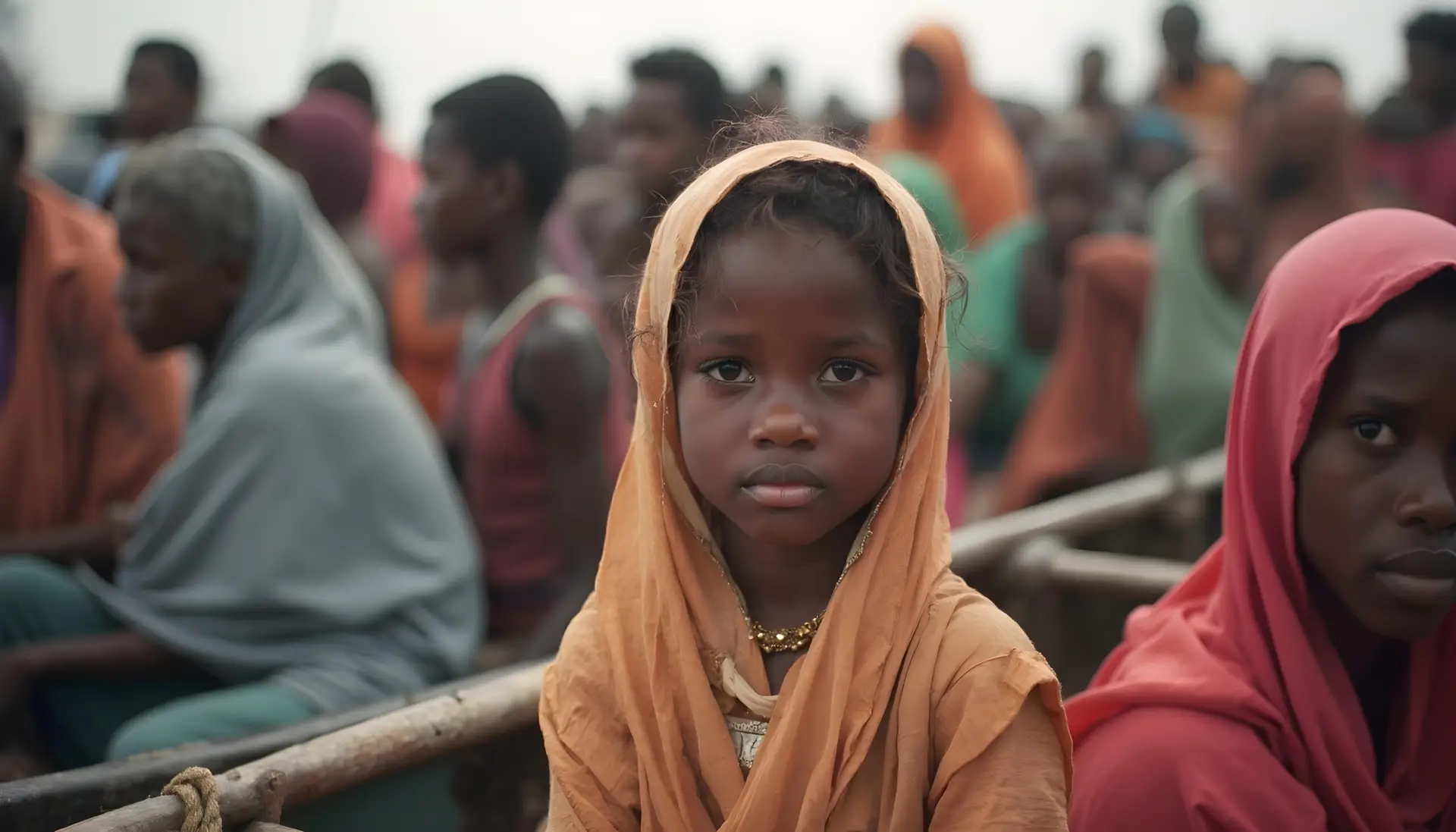
Since decades of wars, coups, and militia rule have torn Sudan apart, the current war between the army and the RSF is only the latest chapter — one in which sexual violence has become part of everyday life in parts of the country, according to numerous reports from aid and human rights organizations. Millions face hunger, tens of millions have been displaced, and the health system is collapsing. While the same veto powers once again justify wars in the Middle East “in the name of justice” and to stop terrorism, one question remains unanswered: Who is willing to stop the crimes being committed in Sudan? Or is there simply no interest in doing so, because those in power in Sudan continue to supply gold and other resources to Western and regional partners?
Global politics likes to present itself as a moral authority. Leaders speak of responsibility, human rights, and a “rules‑based order.” In practice, however, a different logic is at work: conflicts involving strategic adversaries trigger maximum attention, sanctions, and pressure. Conflicts centered on suppliers, business partners, or security contractors are managed, downplayed, or quietly sidelined. Sudan falls squarely into the second category.
This war does not disturb the world because it does not disturb the global order. Sudan is not Iran, not Venezuela, not Russia. It is not a declared enemy; it is a source. Gold, fertile land, livestock, strategic transit and migration routes — the country is rich enough to be exploited, but not important enough to be protected. Unlike Iran or Venezuela, Sudan is not turned into a global villain and subjected to broad, structural sanctions; it is treated as a functional supplier within a wider network, spared not out of compassion but because it is business.
Nowhere is this double standard more visible than in the United Nations Security Council. The veto is often framed as a tool to prevent war, but in many cases it prevents something else: meaningful steps toward peace. The veto is not a moral instrument; it is an instrument of power. Resolutions fail less over the question of what is right and more over the question of whose partners would be affected. The United States shields its allies; Russia and China protect theirs. European states fall silent when economic, security, or migration interests are at stake.
In Sudan’s case, a formal veto is often not even necessary. The mere prospect of confronting one’s own partners is enough to block decisive action. The regular army (SAF) is closely linked to Egypt. The Rapid Support Forces (RSF) maintain strong ties to the United Arab Emirates. Russia, Turkey, Iran, and others seek access to ports, trade routes, and resources. European governments have, for years, woven Sudanese actors into their migration‑control policies. Where so many interests intersect, a tacit consensus of inaction emerges.
Yet Sudan is not a poor country by nature. It is a rich country made poor. Millions of hectares of fertile land, access to the Nile, vast herds, oil reserves, and above all gold could underpin a regional powerhouse. But this wealth does not translate into schools, hospitals, or infrastructure. It flows into the channels of a military‑economic order: into weapons, militias, patronage networks, and loyal elites.
Ordinary people pay the price twice. They labor as cheap workers in mines, fields, and informal sectors, while the same revenues finance the violence that displaces, disenfranchises, and kills them. Anyone talking about resources in Sudan must talk about political architecture — about how wealth is organized to flow upward and outward.
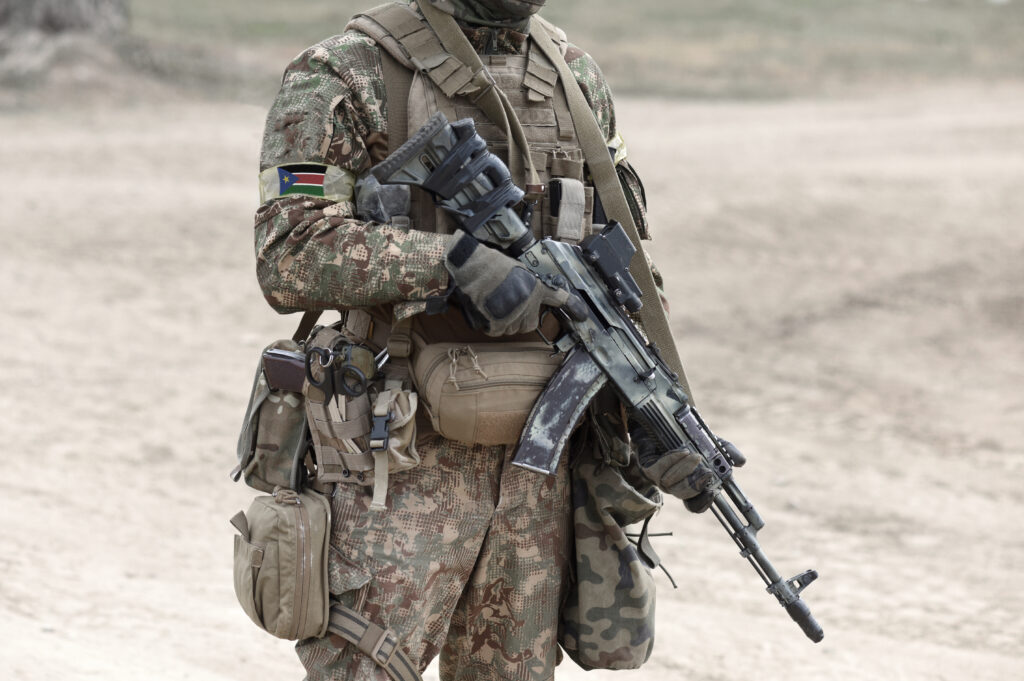
The war itself is less a classic civil war than a struggle between two armed economic and power machines. On one side stands the army (SAF) under Abdel Fattah al‑Burhan, controlling much of the state apparatus, ports, agriculture, real estate, and formal exports — a military‑economic empire in uniform. On the other side stand the RSF under Mohamed Hamdan Dagalo (Hemedti), born from the Janjaweed militias, rooted in gold mining, border trade, mercenary services, and transnational networks.
Neither structure is fighting for democracy or for the people. Both fight for gold, land, international backing, and political recognition. Around them stretches a ring of external interests that does not merely tolerate the war, but helps sustain it. Egypt backs the army for security and Nile‑water reasons. The UAE are widely seen as key RSF partners through gold trading, logistics, and political cover. Other regional and global powers secure spheres of influence, bases, and investment terrain. Europe long treated Sudan as a buffer in its migration‑control regime. The United States and the EU respond late and selectively when pressure mounts — without fundamentally challenging the business model.
In this sense, Sudan is not just a war zone; it is a geopolitical business model — violence as a structural condition for extraction, control, and deterrence.
The most brutal consequence of this architecture is visible in the use of sexual violence. Aid and human rights organizations have been reporting for a long time that rape and sexualized violence are not accidental byproducts of the conflict, but deliberate tools to drive out certain populations, destroy social fabrics, and terrorize communities. Sexual violence becomes a weapon to advance ethnic cleansing and entrench control over territory.
The international response follows a familiar script: expressions of outrage in statements, “deep concern” in press releases, and carefully worded appeals to all parties. Concern is cheap. Peace is expensive. Real peace would mean breaking the logic of these power and economic structures. It would strengthen local populations and weaken armed elites. It would require states to pressure exactly those partners with whom they are tightly bound by trade, security, or migration interests.
That is where the uncomfortable truth lies: peace is not a primary goal of global politics where peace threatens existing profits, security arrangements, and spheres of influence. The world talks about peace but acts for stability, control, and resources. In Sudan, peace would mean a redistribution of power — and with it the end of a system from which too many actors benefit.
Sudan is therefore not a “forgotten” war. It is an ignored one. Not because no one knows, but because the political and economic price of serious engagement is deemed too high. The word “forgotten” suggests oversight or neglect. In reality, it is a choice.
The world has chosen: cheap gold over social justice, controlled migration over freedom of movement, geopolitical deals over the enforcement of international law, strategic calm over the rights of more than 45 million Sudanese men, women, and children. Wealth does not protect a country if it does not belong to its people. Resources do not secure a future if they are privatized and exported while hunger, displacement, and violence remain at home.
Sudan could be an agricultural giant, an energy hub, a gold producer lifting its population out of poverty and stabilizing its region. Instead, it is a battlefield on which domestic elites and external powers conduct their business. The key question is no longer: Why is no one helping Sudan? The real question is: Who would actually have an interest in Sudan finding peace?
The honest answer is sobering. As long as violence, instability, and dependency are treated as functional parts of a global system, the circle of those who truly want peace — and are willing to risk power and profit for it — remains dangerously small.