World leaders respond with concern to Trump’s decision to raise global tariffs from 10% to 15%. But concern and appeals to stability are not a strategy. The world still refuses to confront the simple truth: power inequality is the root of instability, conflict, and economic coercion.
Trump’s move exposes a structural weakness that reaches far beyond the United States. Courts can set limits, but they cannot defend them. A Supreme Court ruling loses its force the moment a president decides to circumvent it politically. That is exactly what happened. The tariffs were declared unlawful and immediately replaced with new measures that achieve the same effect. The American separation of powers now exists more as a principle than as a functioning reality. And if one of the world’s oldest democracies can no longer guarantee its institutional safeguards, this is not an American anomaly. It is a global warning.
The structural fragility of checks and balances
Checks and balances only work when the executive is willing to restrain itself. Once political power becomes stronger than the institutions meant to contain it, the system becomes unstable. Courts can issue rulings, but they cannot enforce them. As Alexander Hamilton wrote in Federalist No. 78, the judiciary has “neither force nor will, but merely judgment.” They have no executive power, no independent instruments to guarantee compliance.
When a president ignores a ruling, uses alternative legal pathways to continue the same policy, or delays, dilutes, or politically neutralizes implementation, the imbalance becomes visible. The stability of the system depends not on law, but on self‑discipline.
If this can happen in one of the world’s oldest democracies, what does it mean for states with weaker institutions? How are they supposed to resist the temptation to place power above law?
The political psychology of power asymmetry
Power inequality is not only structural; it is psychological. It shapes expectations, perceptions, and behavior across every political system.
Where power is concentrated, the belief emerges that rules are negotiable. Those who repeatedly experience the absence of consequences begin to see this not as an exception, but as normality. Power produces the feeling of standing above the rules.
On the other side, the opposite dynamic unfolds. Weaker actors internalize their powerlessness. They lower their expectations, reduce their demands, and accept inequality as an unchangeable reality. Political powerlessness becomes psychological adaptation; adaptation becomes resignation. Inequality becomes not only tolerated, but normalized.
Between these poles, a climate of distrust grows. Weaker states do not believe in the neutrality of international institutions because they know decisions are shaped by power interests. Powerful states distrust rules that might constrain them. Both sides act not from cooperation, but from caution. Neither expects fairness; both expect advantage‑seeking.
These psychological dynamics are the invisible engine of global instability. They erode trust, block genuine cooperation, and turn international rules into selective tools. In a world where power is unevenly distributed, every institution becomes fragile, every agreement precarious, and every diplomatic solution only as stable as the interests of the powerful who tolerate it.
Why diplomacy fails when power is unequal
Diplomacy claims equality among states, but in reality, power inequality determines the outcome of political conflicts. Rules, treaties, and moral appeals lose their meaning the moment they contradict the interests of the powerful.
The war in Ukraine makes this brutally clear. Diplomatic appeals neither prevented the war nor ended it. Military, economic, and geopolitical power relations shape every option. States without sufficient power can negotiate, warn, and appeal—but they cannot compel. Their diplomacy is symbolic because it lacks structural force.
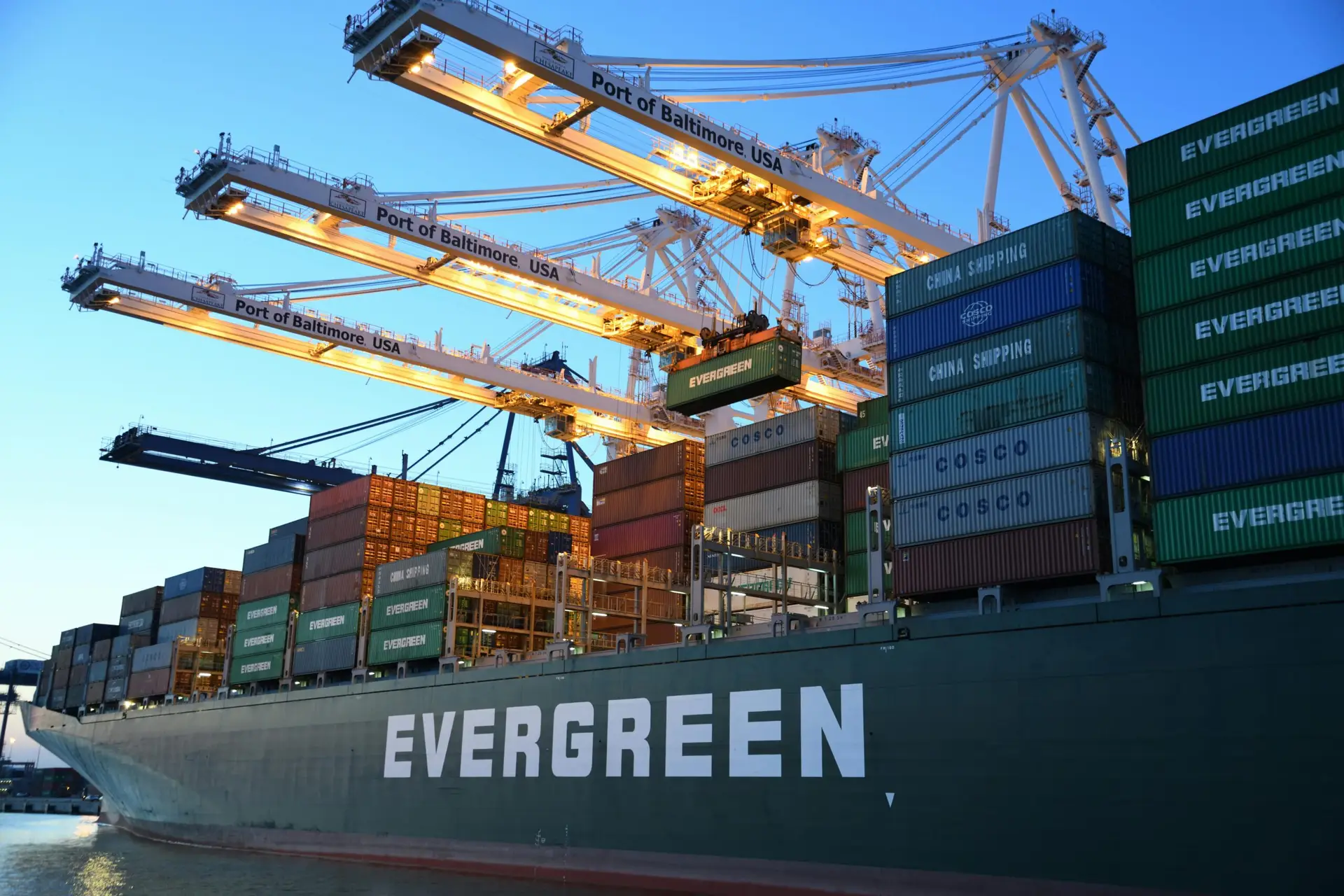
The same pattern defines the global economy. Trade rules are written by the strongest economies. Tariffs and sanctions function as political pressure tools. Global supply chains reproduce dependencies that keep entire regions structurally weak. These dependencies are not accidental; they are the product of a world order that not only tolerates power inequality but systematically reinforces it.
Diplomacy cannot correct these inequalities. At best, it can manage them—and only as long as the powerful allow it.
In a world of unequal power, diplomacy becomes a ritual without enforcement. It does not resolve conflicts; it postpones them. It does not create stability; it prolongs the illusion of stability. And it cannot protect an order designed to privilege the strong and keep the weak dependent.
The economic mechanisms of dependency
Economic dependency is not accidental. It is the result of an architecture designed and enforced by the world’s strongest economies. Markets are not neutral; they are political spaces shaped by trade agreements, tariffs, subsidies, and standards that reflect the interests of the powerful. Those who write the rules control the margins of action for everyone else. This dynamic is extensively documented in UNCTAD’s Trade and Development Report, which shows how global trade rules systematically reflect the interests of dominant economies.
Dependency creates vulnerability. When a country relies on specific imports or exports, economic pressure becomes political pressure. The line between trade and coercion blurs. States without access to capital, technology, or markets remain structurally weak—and therefore politically malleable. Inequality is not only reproduced; it is stabilized. It becomes the foundation of international relations.
These mechanisms show that economic inequality is not an economic detail but a political foundation. It creates the conditions under which instability becomes inevitable: those who are dependent cannot act freely; those who cannot act freely cannot avoid conflict; and those who cannot avoid conflict live in an order that does not protect them but exposes them.
Historical patterns of power inequality
History shows with relentless consistency that power inequality produces the same outcomes across eras.
Colonialism created political and economic structures that institutionalized inequality: borders drawn, resources extracted, societies stratified. Power was concentrated in the hands of a few; the consequences were borne by many. The end of colonial empires did not end the pattern; it merely changed its form.
During the Cold War, states were treated not according to their interests but according to their strategic utility. Countries in Africa, Asia, and Latin America became arenas of proxy logic, where their own needs were secondary. Those who fit the great powers’ strategic calculus were supported; those who did not were ignored or destabilized. Power inequality drove conflict and prevented solutions.
In the globalized present, the pattern continues. Markets, institutions, and security architectures are shaped by states with the greatest resources. International organizations can act only within the boundaries set by the powerful. Trade regimes, credit conditions, security alliances—all follow the logic of influence, not equality. Those with power define the rules; those without power must obey them.
Across all eras, the principle remains the same:
Where power is concentrated, arbitrariness and instability emerge.
Where power is absent, dependency and vulnerability follow.
Where power is unequal, rules are not applied—they are adjusted to preserve the existing order.
Instability is not an accident. It is the logical consequence of a world where power is concentrated rather than distributed—and where inequality is not recognized as a problem but accepted as a structure.
The world stands at a turning point
World leaders respond to Trump’s tariffs with concern, appeals, and diplomatic language. But concern does not change power relations. It soothes, it obscures, it delays—but it resolves nothing.
As long as power remains unevenly distributed, rulings will be ignored, rules will be broken, diplomacy will be ineffective, and instability will become the norm. The question is no longer whether the current order will hold, but how long it can withstand the pressures it has created.
A new global order is not an idealistic vision—it is a structural necessity. An order that treats power equality not as a moral aspiration but as the precondition for peace, stability, and justice. An order in which institutions do not depend on the goodwill of the powerful. An order in which rules do not apply only to the weak. An order built not on appeals, but on equal capacity to act.
Until such an order exists, the world will continue to experience what it experiences today: power overriding law, interests overriding diplomacy, and instability emerging as the inevitable outcome of a world that accepts power inequality instead of overcoming it.
Equalism—the theoretical foundation
This analysis is grounded in the core formula of Equalism, which I developed in my manifesto: true justice arises from equality of power, not equality of capital.
The full theory is presented in the Equalism Manifesto, available on Kindle.