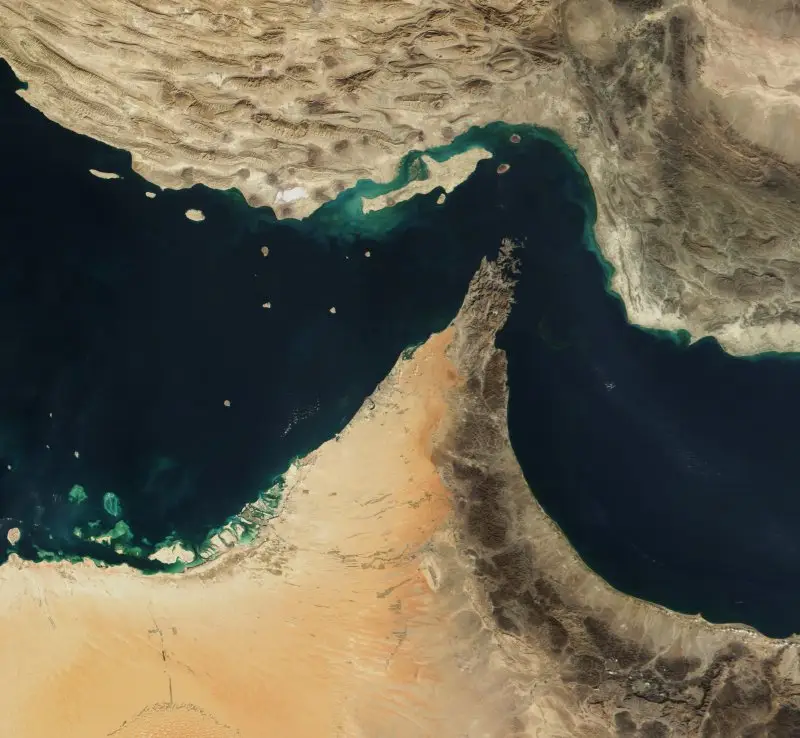
Since 28 February, when joint US‑Israeli airstrikes hit targets across Iran and Tehran responded with missile and drone attacks on US bases and regional states, the UN Security Council has been in almost permanent crisis mode. UN Secretary‑General António Guterres warned that the escalation risked “igniting a chain of events that nobody can control in the most volatile region of the world” and called for maximum restraint and an immediate ceasefire. At the same time, the war has pushed oil prices back above 100 dollars per barrel, turned the Strait of Hormuz into the most dangerous chokepoint on the planet, and triggered emergency releases from strategic reserves around the world. In New York, however, the official narrative quickly narrowed to one central claim: Iran must not be allowed to “hold the world hostage.
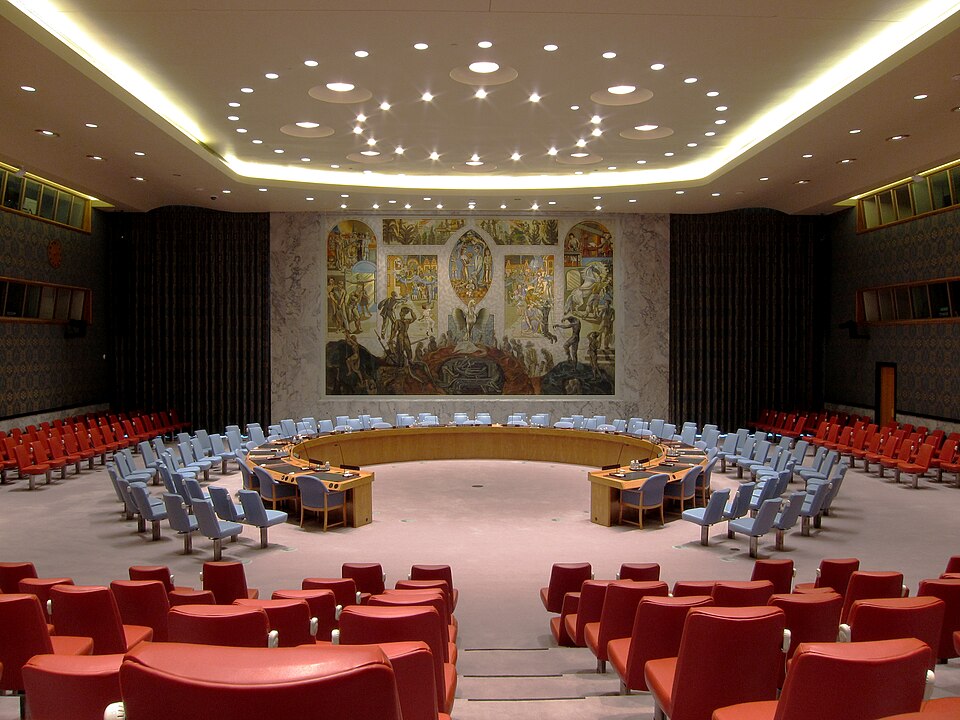
In the latest Council meeting, the US ambassador accused Russia and China of “shielding their partner Iran” and blocking the work of the Iran sanctions committee while insisting that the United States is merely enforcing non‑proliferation rules and making sure that “Iran can no longer hold the world hostage with its missile, drone, and nuclear programs.” The language is revealing: Iran is cast as the actor “holding the world hostage,” even though a war led by two veto powers has driven oil prices through the roof, triggered historic reserve releases, and turned the Strait of Hormuz itself into a global hostage situation. Equalism asks why a system in which veto powers accuse others of exactly what they are structurally able to do themselves—weaponizing chokepoints and institutions—is still called a “security” order.
Resolution 2817: Who is “the guilty party”?
On 11 March, the Security Council finally adopted Resolution 2817, presented by Bahrain on behalf of the Gulf Cooperation Council and co‑sponsored by 135 UN member states. With 13 votes in favor and abstentions by China and Russia, the resolution “condemns unequivocally, in the strongest terms” Iran’s “egregious” missile and drone attacks against Bahrain, Kuwait, Oman, Qatar, Saudi Arabia, the United Arab Emirates, and Jordan and describes them as a breach of international law and a serious threat to international peace and security. It demands an immediate and unconditional halt to Iranian strikes and provocations, including via proxy forces, and explicitly condemns actions or threats aimed at closing or obstructing the Strait of Hormuz.
In the debate, many Western and Gulf delegations framed Iran as the main destabilizing force that “shoots in all directions,” threatening civilians, energy infrastructure, and global trade routes. The nearly 140 co‑sponsors were presented as the “collective conscience” of the international community defending global security, trade, and economic stability against a reckless regional actor. The text, however, does not mention the initial US and Israeli airstrikes on Iran that triggered the regional escalation, nor the continuing joint operations against Iranian territory and allied groups.
China and Russia, which abstained, underlined this asymmetry: they criticized the resolution for ignoring what they described as unauthorized US and Israeli use of force and for assigning sole responsibility for the crisis to Iran. A Russian draft that avoided naming specific parties and focused instead on an immediate ceasefire and de‑escalation failed to secure the required nine votes, while Washington and its allies presented Resolution 2817 as a defense of international law. The outcome fits a familiar pattern: strong condemnation of the response attacks by a regional power, and silence on the initiating strikes by two veto powers.
A hyperactive yet blocked Security Council
Resolution 2817 is only one snapshot in a packed UN calendar since the war began. On 28 February, the Council met in emergency session to discuss the US‑Israeli airstrikes on Iran and Tehran’s retaliation against US bases and regional states. Guterres condemned both the large‑scale strikes carried out by the United States and Israel and the subsequent Iranian attacks on the territories of Bahrain, Iraq, Jordan, Kuwait, Qatar, Saudi Arabia, and the United Arab Emirates. He warned that “everything must be done to prevent further escalation,” yet the Council did not manage to adopt a binding resolution.
In the days that followed, the Council moved through an almost surreal range of topics. On 2 March, under the US presidency, members discussed 473 million children living in or fleeing conflict zones and the promise and risks of digital education in a meeting unusually chaired by the First Lady of the United States. Subsequent sessions dealt with Libya, Afghanistan, and Syria, including new findings that more than 100 additional sites may have been linked to the former Syrian chemical weapons program and technical updates to the Afghanistan sanctions list under Resolution 1988. In parallel, the Council heard that Lebanon is “exhausted by other people’s wars” as Iran and Israel fight their confrontation on its territory.
This intense activity shows an institution that is almost never at rest—but precisely where the veto powers are directly involved, it hits a structural wall. The first strong resolution on the new war condemns only Iranian attacks; a draft that would have called on all sides to halt hostilities fails. Meanwhile, societies around the globe experience the fallout: energy prices, supply chains, inflation – all become mirrors of decisions taken in a handful of capitals.
Reviving the 1737 sanctions committee
Against this backdrop, Washington’s move to revive the long‑dormant Iran sanctions committee looks like a second, institutional battlefield. On 12 March, the Council’s live program announced an open briefing on the work of the committee established under Resolution 1737 (2006) concerning Iran’s nuclear program, convened by the United States under the “non‑proliferation” agenda item. The committee had effectively fallen inactive after the 2015 Joint Comprehensive Plan of Action (JCPOA) suspended earlier UN nuclear‑related sanctions on Iran.
In 2025, France, Germany, and the United Kingdom triggered the JCPOA’s “snapback” mechanism, arguing that this reimposed all previous UN sanctions on Iran. Since then, the US and European members insist that the 1737 sanctions regime is fully back in force and legally binding on all states, and that the committee and its Panel of Experts are restored. China, Russia, and Iran reject this legal reading and say the snapback is null and void; they do not recognize the committee or consider themselves bound by its decisions. In practice, this means that the same power blocs that face off on the battlefield are simultaneously fighting over who controls the institutional narrative about “nonproliferation,” sanctions, and which coercive measures count as “legal.”
Equalism: Who is holding whom hostage?
In the debate over Iran, the official line is clear: no single state should be allowed to “hold the world hostage” through missiles, drones, or nuclear capabilities. But the current crisis exposes a different mechanism: a small group of veto powers can, through airstrikes, maritime chokepoints, sanctions regimes, and the management of strategic reserves, put the lives of billions indirectly on the table—while being structurally less exposed to the worst consequences themselves. The Strait of Hormuz, which the Council describes as a vital artery for “global stability, energy security, and trade,” becomes the pressure point through which entire regions are put on “alert.”
Equalism calls this what it is: a world order in which those who can launch hundreds of strikes in a single night are also those least vulnerable to the fallout, while those with no voice in the Security Council pay the highest price. The UN timeline since the start of this war therefore tells two stories at once: the story of an overstretched Council debating children, education, Lebanon, Syria, Afghanistan, and Iran—and the story of an architecture in which the core decisions on war, oil, and sanctions remain concentrated in the hands of a few veto powers. In such a system, it is not only the Strait of Hormuz that becomes a hostage space. It is the structure itself that makes the world permanently hostage-ready.