The United States is presenting a 15‑point proposal to end the war with Iran, publicly framing it as a serious diplomatic effort. In reality, the plan closely mirrors a package of demands that already failed in Geneva before the war – and it is being floated at a time when US and allied airstrikes continue and additional troops are deployed into the region. This raises a central question: Is this a realistic peace proposal, or a political shield for an ongoing strategy of escalation?
A “New” Plan That Is Really the Old One
According to multiple reports, Washington has sent Iran a 15‑point plan through Pakistan rather than via direct channels. The content, however, is anything but new. It largely revives the same set of maximal demands tabled in Geneva earlier this year – demands that Tehran firmly rejected at the time.
In Geneva, the US relied on an informal track that involved Jared Kushner, who does not hold an official government position, and real‑estate investor Steve Witkoff. This alone signaled to Tehran that Washington did not treat the issue with the institutional weight normally expected in high‑stakes security negotiations. For Iran, it looked less like a formal, state‑to‑state negotiation and more like a politically driven side channel.
The core of the current 15‑point plan again revolves around far‑reaching Iranian concessions. Key elements include:
- Destruction or dismantling of key nuclear facilities
- A complete halt to uranium enrichment
- An end to Iran’s missile production
- Transfer or removal of already enriched uranium
- Reopening and keeping open the Strait of Hormuz for international shipping
- In return: partial or phased easing of US sanctions and limited economic relief
Almost all of these demands were already on the table in Geneva. Back then, under conditions far less destructive than open war, Iran refused to accept them, arguing that they amounted to unilateral strategic disarmament in exchange for vague and reversible economic concessions. The updated focus on “freeing” the Strait of Hormuz changes little about this underlying imbalance: Tehran is still asked to give up core strategic leverage while Washington offers mainly sanctions relief that can be reimposed at any time.
Diplomacy on Paper, Escalation on the Ground
The way the plan is being delivered and framed also matters. By routing it through Pakistan, Washington can claim that talks are “under way” while keeping diplomatic distance and deniability. A third‑party channel allows the US to say it has made an effort, even if the proposal is predictably rejected.
At the same time, the military reality is moving in the opposite direction. US and Israeli airstrikes on Iranian targets and infrastructure are continuing. Iranian commanders have been killed, and key sites in cities such as Isfahan, Shiraz and Bandar Abbas have suffered significant damage. In parallel, the Pentagon is deploying thousands of additional airborne troops into the region, adding to an already substantial US military presence.
This dual track sends a clear signal: On paper, Washington is talking about peace; on the ground, it is acting as if it is preparing for a prolonged confrontation. For a leadership in Tehran that is experiencing the war in real time, such a proposal does not look like an honest attempt at compromise. It looks like an instrument of pressure.
Is This Plan Even Meant to Be Workable?
The crucial analytical point is simple: A package that Iran already rejected before the war is even less likely to be accepted in the middle of a war. Tehran has absorbed heavy losses but has not collapsed strategically. It has:
- Retained significant missile capabilities
- Preserved control over large parts of its critical infrastructure
- Kept the ability to threaten or block the Strait of Hormuz
- Maintained enough military capacity to impose costs on its adversaries
From Tehran’s perspective, accepting the US plan now would not just mean backing down – it would mean voluntarily surrendering its main deterrence tools at a moment of maximum vulnerability. That is why, in Iranian statements, the proposal is described not as a negotiation but as a demand for capitulation.
This is also why your core argument is strong: the plan looks structurally “unworkable.” It was not acceptable in Geneva under pre‑war conditions, and the war has only hardened positions on both sides. The fact that Washington is now recycling the same blueprint – with minor adjustments – suggests that the primary objective is not actually to reach an agreement.
The Political Logic Behind Trump’s Move
If the plan is not realistically meant to be accepted, what purpose does it serve? Seen through a political lens, several functions stand out:
- Image management
The US can tell its own public and its allies that it is “trying diplomacy” and has put a detailed plan on the table. That helps answer criticism and calms partners who fear a wider regional war. - Shifting responsibility
If Iran rejects the plan, Washington can point to Tehran as the side that “said no to peace,” thereby shifting blame for the continuation of the conflict. - Buying time for military positioning
While the plan is formally under consideration, the US continues air operations and moves additional troops and assets into the region. The diplomatic track becomes a political cover for military preparations already under way. - Using repetition as strategy
A plan that cannot be accepted is politically useful precisely because it will not be accepted. By repeating the same conditions that failed before, Washington keeps control of the narrative without having to adjust its own red lines.
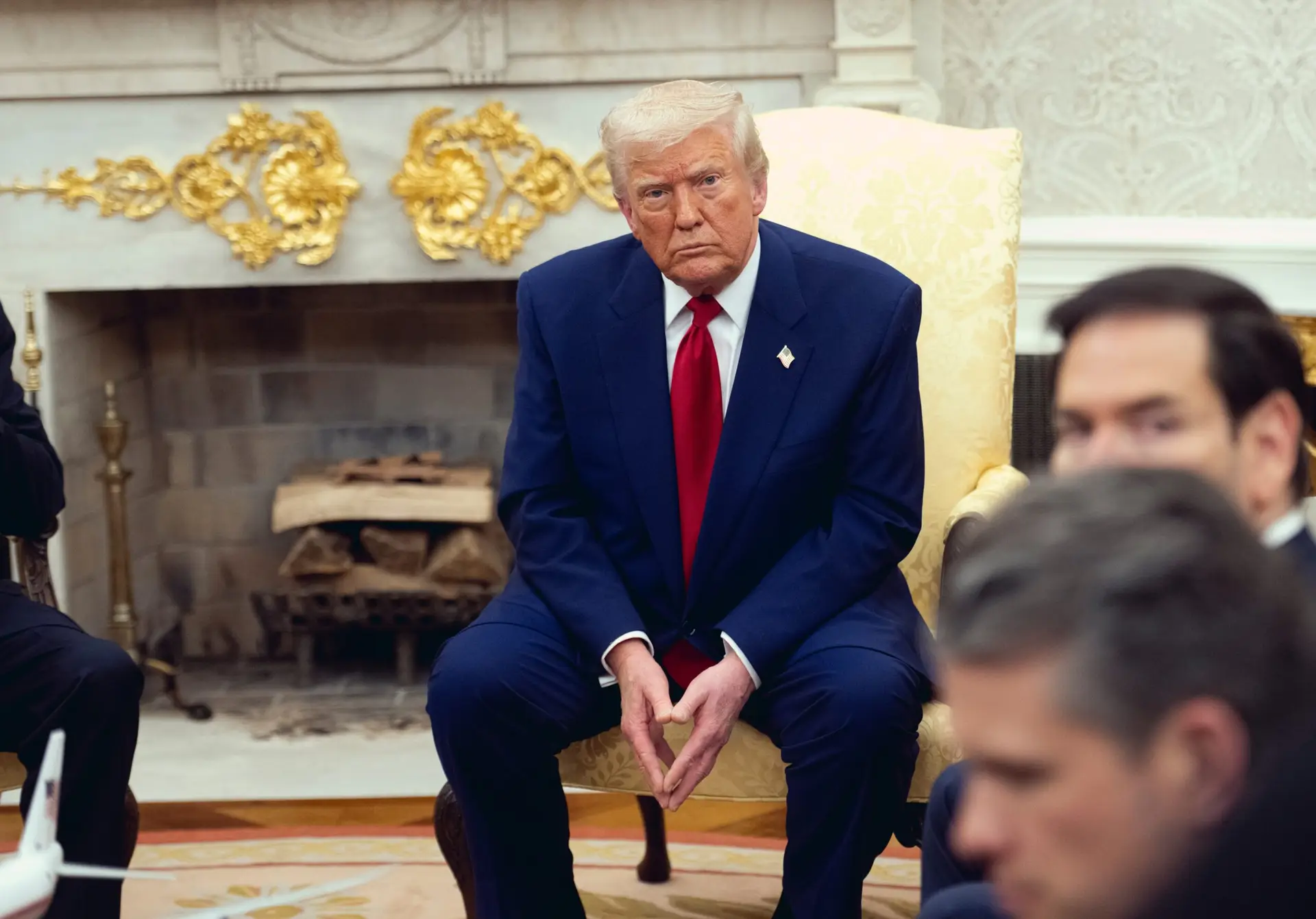
From this angle, Trump is not acting as if he expects a real agreement. He is acting as if he needs a proposal that sounds like a peace offer but functions as a diplomatic shield. He knows that Tehran rejected this architecture once already and that, after significant casualties but without a decisive military defeat, Iran has even fewer reasons to surrender its strategic tools now. The simultaneous dispatch of a hardened 15‑point plan and thousands of additional troops fits that logic: the paper is for the world, the soldiers are for the war.
Read more: