Israeli settlers have rampaged through multiple Palestinian towns in the occupied West Bank in recent days, setting homes and cars on fire and injuring scores of people in coordinated nighttime attacks. The latest wave of violence, documented near Nablus, Jenin and in rural areas like Masafer Yatta and the Jordan Valley, comes as Israel intensifies its war with Iran—and as rights groups warn that West Bank communities are being pushed past a breaking point.
As Israel and Iran trade rockets and drones, another front is intensifying out of the spotlight: In the occupied West Bank, Palestinian communities report a sharp rise in violence by radical Israeli settlers. Human rights groups describe a pattern of village raids, arson attacks and forced displacement that predates the Iran war—but is now accelerating under its cover.
The Iran war dominates global attention. Missiles strike, drones circle over cities, and governments threaten retaliation. While the big battlefields drive the headlines, a different reality is unfolding in the West Bank. For weeks, radical settlers have been attacking Palestinian villages, setting homes on fire and forcing families to flee in the middle of the night. The violence is not random. It follows a logic that has taken shape over years—and the current war is amplifying it.
The Israeli army has concentrated forces in the north and south to respond to attacks from Lebanon and Gaza. Rights groups and analysts say that these wartime deployments, combined with tighter movement restrictions on Palestinians, have effectively created a security vacuum in parts of the West Bank. Extremist settler groups are exploiting this situation, entering villages, vandalizing property and torching cars. Residents report that soldiers are sometimes nearby but fail to intervene, or arrive only after attackers have left. For many communities, such incidents are no longer seen as exceptions but as the new normal.
The scale of the violence has reached a point that even Israeli officials can no longer ignore. New army units have been deployed to the West Bank as attacks on Palestinian civilians and property surge. A recent UN human rights report finds that accelerating settler violence, frequently assisted or facilitated by Israeli security forces personnel, has deepened the pressure on Palestinian communities in the occupied West Bank. According to rights groups such as Yesh Din and B’Tselem, organized settler assaults on multiple communities in a single day have become more common, especially since late 2025.
Many of the attacks follow a pattern that perpetrators themselves call “price tag” operations. When the state moves against unauthorized outposts, demolishes structures, or when major military events occur in Gaza, Lebanon, or now Iran, hardline settlers seek to make someone “pay the price.” That price is not paid by the state but by Palestinian civilians. Farmers, families, and entire village communities are targeted; homes, vehicles, and fields are destroyed. The message is meant to travel far beyond each individual incident: certain areas are to become unlivable.
For years, human rights organizations have documented that complaints against settlers rarely lead to effective investigations. Cases are closed without charges, indictments are rare and convictions even rarer. A new Yesh Din data sheet finds that more than 90 percent of cases involving ideologically motivated settler violence monitored since 2005 ended without an indictment. UN reports now speak of “longstanding and pervasive impunity” that facilitates and encourages violence and harassment of Palestinians.
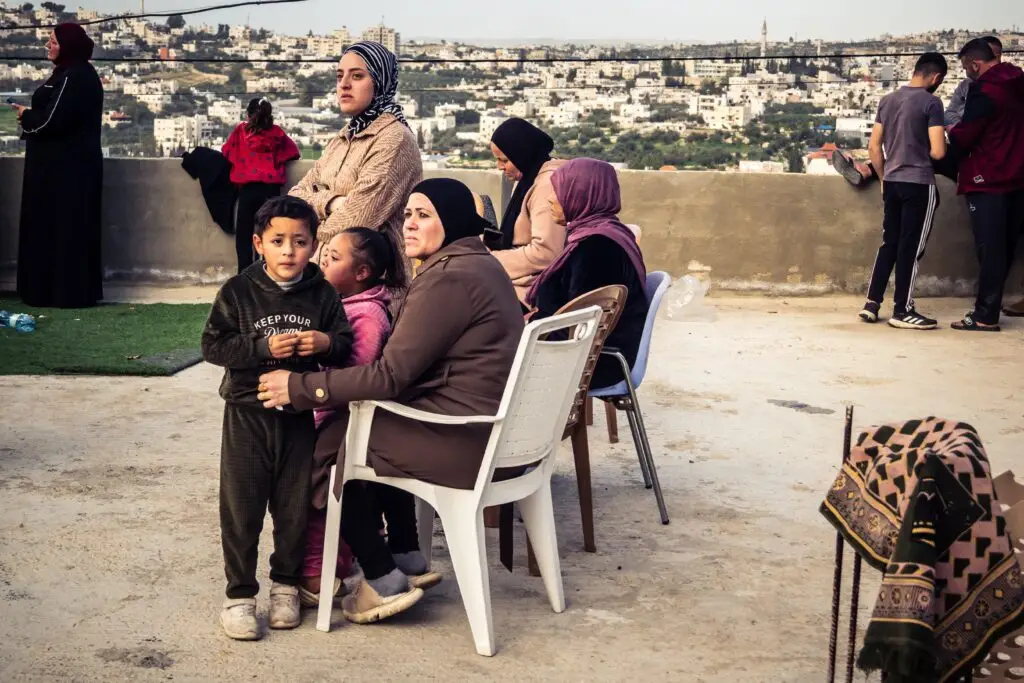
This reality is reshaping the behavior of everyone involved. Perpetrators act with a sense of protection; victims feel exposed and abandoned. Impunity is no longer a technical flaw in the justice system; it has become a political factor in its own right. It shifts power balances, fuels vigilantism and normalizes violence as a tool to change facts on the ground. Many families pack up and leave because they see no alternative. UN agencies describe this as a “coercive environment”—conditions that effectively force people off their land without formal eviction orders.
The current Iran war acts as a catalyst. It ties down military resources, diverts international attention and heightens ideological tensions. Radical groups see the confrontation with Iran as a historic moment and move more aggressively. Analysts and UN experts report that settler attacks have spiked since the first strikes on Iran, with dozens of incidents recorded in just the first days of the campaign. Violence in the West Bank climbs while the world watches the bigger battlefields.
Data from the Gaza war already showed a similar pattern. While Israel was fighting Hamas in Gaza, its forces carried out repeated ground incursions and airstrikes across the West Bank, killing at least 806 Palestinians, including 143 children, and coinciding with more than 800 recorded settler attacks in just eight months. The Iran war appears to follow the same playbook: a major frontline conflict draws global focus, while parallel operations and settler violence in the West Bank deepen a longer-running crisis that predates the latest war.
Violence does not emerge in a vacuum. It grows where people lack effective rights, where courts do not function and where whole communities are systematically deprived of protection. Research from Afghanistan, Iraq, Lebanon and other conflict zones shows that such environments drive radicalization—often less out of ideology than out of accumulated frustration and powerlessness. The same dynamics are now visible in the West Bank, where prolonged insecurity and forced displacement are hardening attitudes on all sides.
The Iran war produces images the world immediately understands: explosions, missile batteries, emergency summits. West Bank violence produces different images: burning homes, children in shock, abandoned fields. These rarely make front pages, yet they reveal a central truth the larger war obscures. The region is not only facing a military confrontation between states. It is also living through a social conflict aimed at communities that have no army and little political leverage.
At some point, the Iran war will end. Diplomats will negotiate cease-fires, and the media cycle will move on. But West Bank violence will persist as long as its structural drivers remain untouched. A territory without meaningful rule of law cannot remain stable. It produces violence, fuels radicalization and breeds the next round of conflict. What the region does not need are new fronts. What it does need is functioning accountability—locally and internationally. Without it, every truce is just a pause before the next escalation.