Structural Conflicts in the Present
Today’s geopolitical tensions make this clearer than ever. First, Donald Trump’s negotiations with Russia over a potential withdrawal from Ukraine failed. Shortly afterward, he called for a stronger U.S. military presence in Greenland.
A Russian withdrawal is solely within Russia’s control—the U.S. cannot enforce it. Greenland, by contrast, falls under Washington’s strategic initiative. This asymmetry exposes the structural problem of the international order.
Trump acted on behalf of the United States, placing Europe in a dilemma that did not arise from his personality but from the architecture of the system itself. Suddenly, European allies faced not only Russia but also uncertainty about U.S. reliability, even though both sides are NATO partners. Europe must deter Russia, maintain its partnership with the U.S., and simultaneously strengthen its own security sovereignty. From a single conflict, multiple pressures emerge—not caused by Russia alone, but by the structure of the system itself.
This became particularly clear when Trump demanded a unilateral U.S. Arctic strategy and effective control over Greenland, excluding Europe—even though Greenland is part of Denmark and several European countries are NATO members. Washington reacted angrily to European troop deployments, despite Trump’s stated reasoning of “security interests,” “protection of sea routes,” and “NATO obligations.”
Here lies the contradiction: if collective security were the true goal, the presence of European NATO forces would be welcomed. That it was not shows that this is about control, not security.
Trump had already publicly disparaged Europe: “weak,” “decaying,” “unviable,” a “civilizational decline”—praising political forces that destabilize European governments. Official U.S. strategy documents described Europe as plagued by “censorship,” “democracy loss,” and “identity crisis.”
Yet Trump is not the exception.
Today it is Trump. Tomorrow someone else. The structure allows it—this is why it happens.
The UN’s Powerlessness
The Greenland demand is not an isolated case; it reflects a broader strategic reality. When a great power claims a territory unilaterally, it ceases to be a NATO issue. Theoretically, the UN would have jurisdiction—practically, it is powerless.
Every veto power can block any decision, including its own. Whether Venezuela, Ukraine, or Greenland, the moment a vital interest of a veto power is affected, the UN’s enforcement capacity ends.
The UN was created to secure peace. Yet its power structure stems from 1945. Five states—the victors of World War II—still control key decisions on war, peace, sanctions, and international interventions.
These five states can start wars, block actions, or ignore crises—and no one can legally stop them. Not because of moral superiority, but because of a veto right from 1945.
Germany, one of the largest financial contributors, remains without a permanent Security Council seat—not because of its current role, but due to an order from another era. Germany has no veto power because it lost the war—even though the regime that fought it no longer exists.
It is often overlooked that today’s veto powers can produce governments that act riskily or unilaterally. History also shows that the moral foundation of the veto is fragile: even among the victors, decisions cost millions of lives. Yet they retain structural power, while states that were once colonized or exploited have no voice—even though their resources form the foundation of the modern world order.
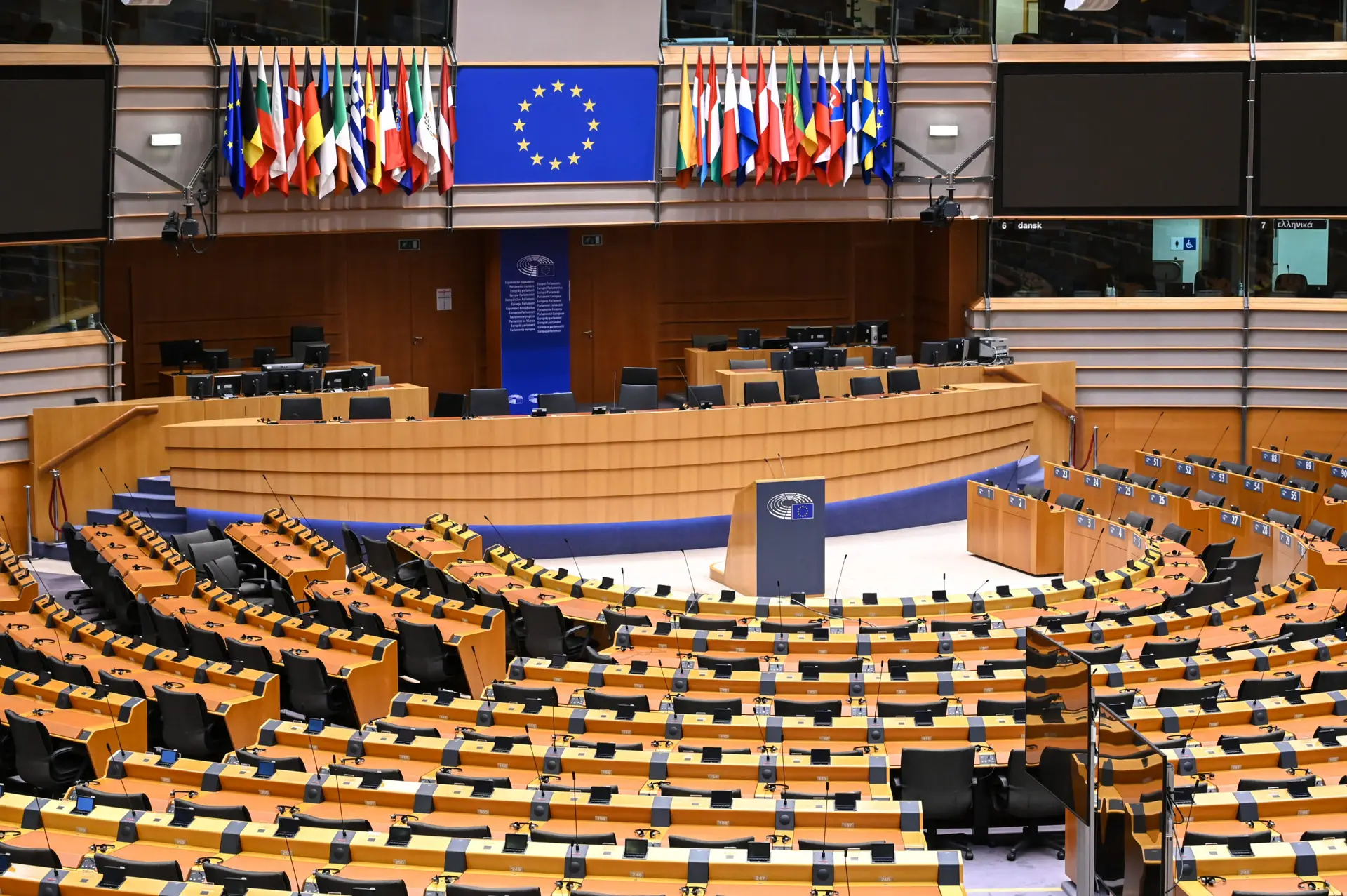
The U.S. can act unilaterally—Europe cannot, because it is structurally dependent on others’ consent.
And this is exactly the problem for Europe, Greenland, and many other regions. States formally possess sovereignty—but in practice, it is conditional.
Sovereignty exists only where it does not contradict the interests of the great powers.
What does this mean for Europe, Greenland—and for future conflicts in Taiwan, the Arctic, or the Middle East?
The UN as a Frozen Power Structure
When veto powers clash, the UN is paralyzed. This is when the world needs it most.
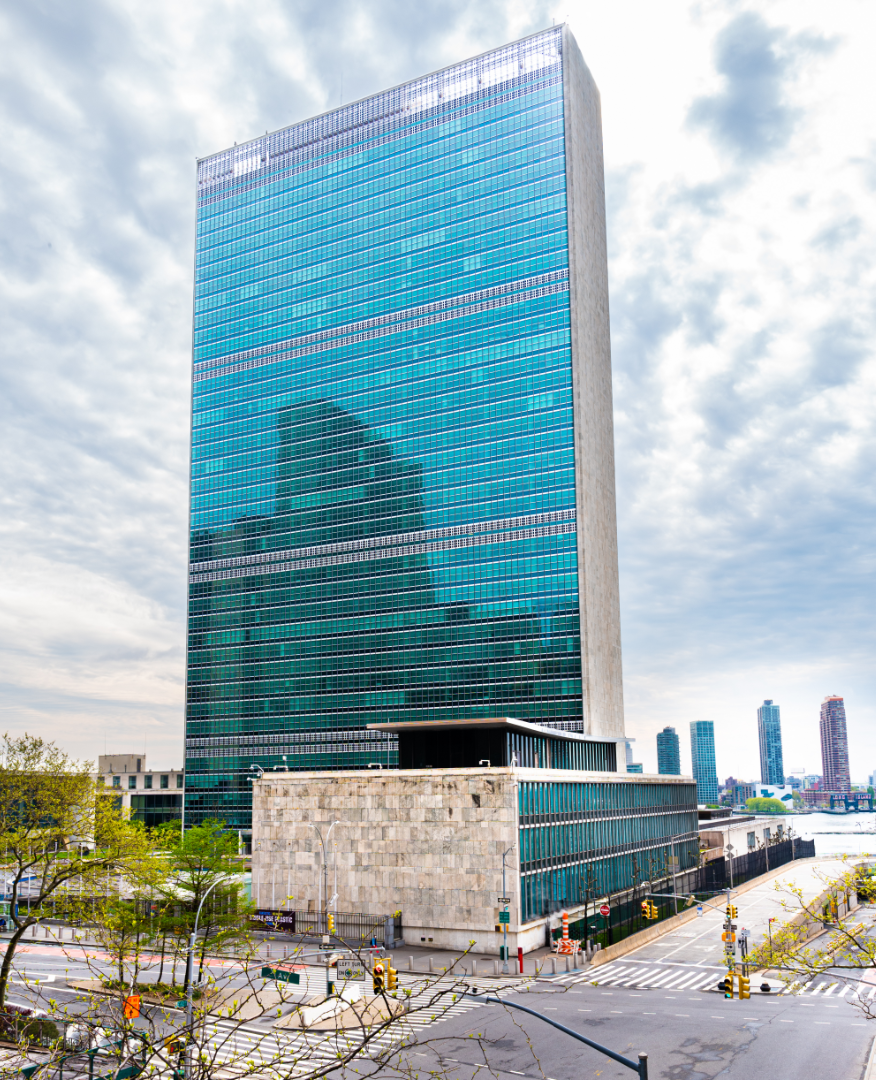
The UN is not a democracy. It is a frozen power structure from 1945.
As long as five states count more than nearly two hundred others, peace will be determined by power, not law.
Recent events illustrate this clearly: China is planning financial strategies against the U.S., for example, through Venezuela’s gold reserves. Russia openly warns that Europe is “on the side of war,” while two European states themselves are veto powers and deeply divided—a scenario that exemplifies the UN’s impotence.
The General Assembly has 193 states, each with one vote—yet decisions are made exclusively in the Security Council. There, 15 states, five with veto power, control war, peace, sanctions, and interventions. The majority remains powerless.
The result is a structural contradiction: the U.S., Europe, and other Western democracies defend democratic values, yet accept no majority-based decision in the UN’s central body. Democracy at home, veto politics abroad—this logic prevents peaceful solutions.
States like China, Russia, or smaller countries therefore seek alternative ways to pursue their interests—financial mechanisms, alliances, bilateral agreements. The “democracy of nations” is a façade; real power is concentrated in a few hands.
This system explains why current conflicts—Ukraine, the Arctic, Taiwan, and the Middle East—cannot be effectively addressed. Veto powers can block; other states remain powerless. Sovereignty exists only insofar as it aligns with the interests of the five most powerful states. The UN is thus not a referee of peace but a guarantee of the continuation of historical power imbalances.
As long as a 1945 world order governs the reality of the 21st century—excluding states for being too small or for carrying historical burdens—conflicts will not be resolved; they will be reproduced.