The German Social State on Trial
The German social state obligates its institutions to protect the economic existence, health, and dignity of individuals. When a statutory health insurance fund violates these fundamental principles, it becomes both legitimate and necessary to document its administrative actions publicly. Social courts are public courts, and their files must be transparent and comprehensible.
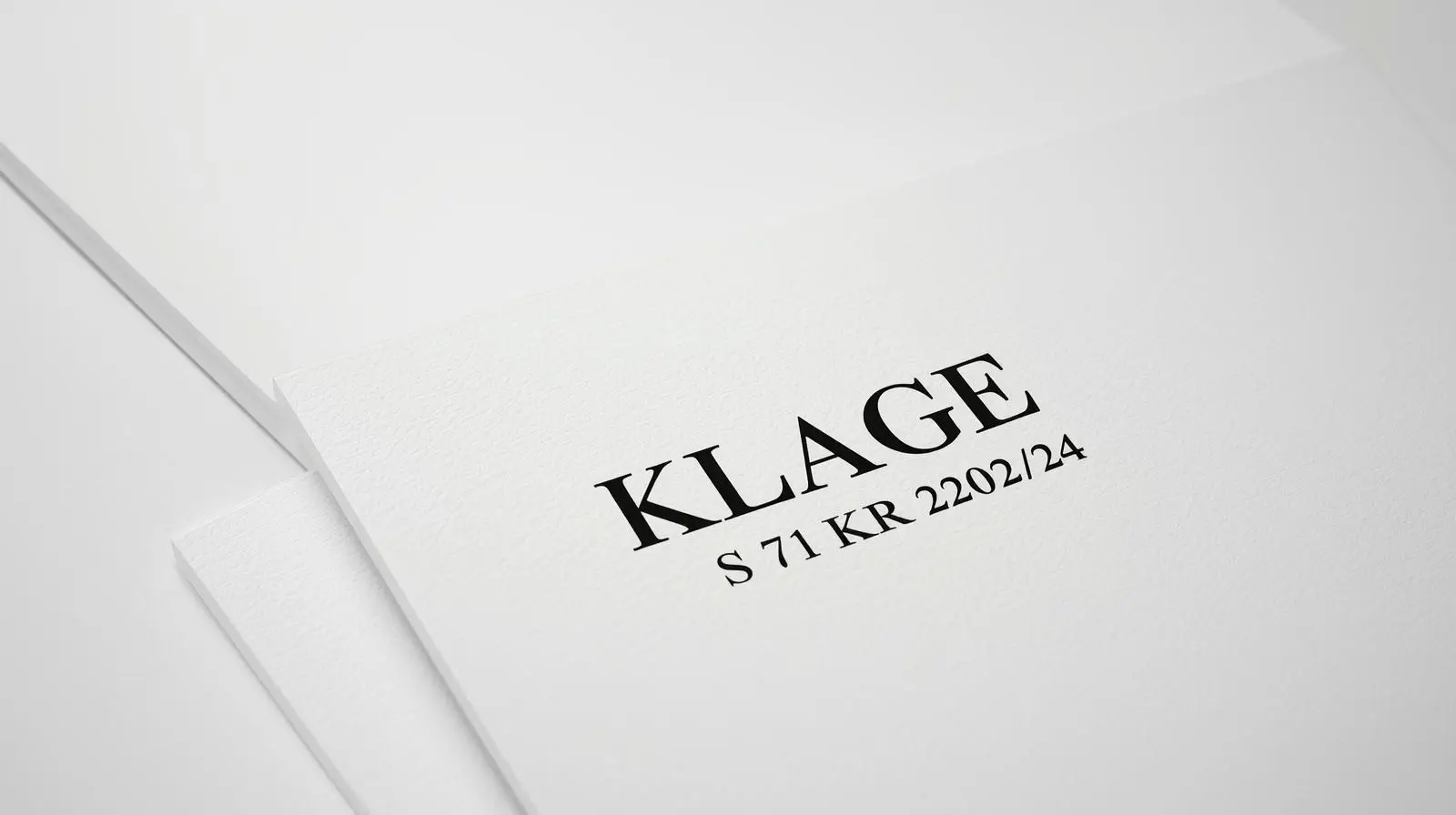
On May 4, 2025, the plaintiff, Eglantina Frroku, filed a lawsuit against IKK Classic at the Social Court of Berlin (Case No. S 71 KR 2202⁄24). This lawsuit does not concern an abstract legal question but the concrete economic and medical existence of an insured person.
The plaintiff was compelled to take legal action after the defendant asserted claims immediately following the termination of insolvency proceedings—despite having contributed directly to the destruction of her economic existence.
In 2016, the plaintiff founded a business in the fashion sector, expanding it with an online presence in April 2019 and an online shop in July 2020. An online shop is often considered an independent business asset, encompassing software, domains, content, photos, videos, design, and marketing measures such as SEO optimization and advertising campaigns.
Under the principles of balance sheet clarity and accuracy (§ 252 and § 266 of the German Commercial Code), business expenditures that create long‑term value—such as domains, websites, online shops, and store equipment—must be recorded as assets. According to § 5 of the German Trademark Act, the business name “Eglantina Frroku” has acquired intangible value through long‑term use and public recognition.
Between 2019 and 2020, the plaintiff invested more than €150,000 into her business. These investments, together with the domain and website active since 2019 and the continuous media presence of the name “Eglantina Frroku” since 2016, clearly demonstrate that long‑term value was created.
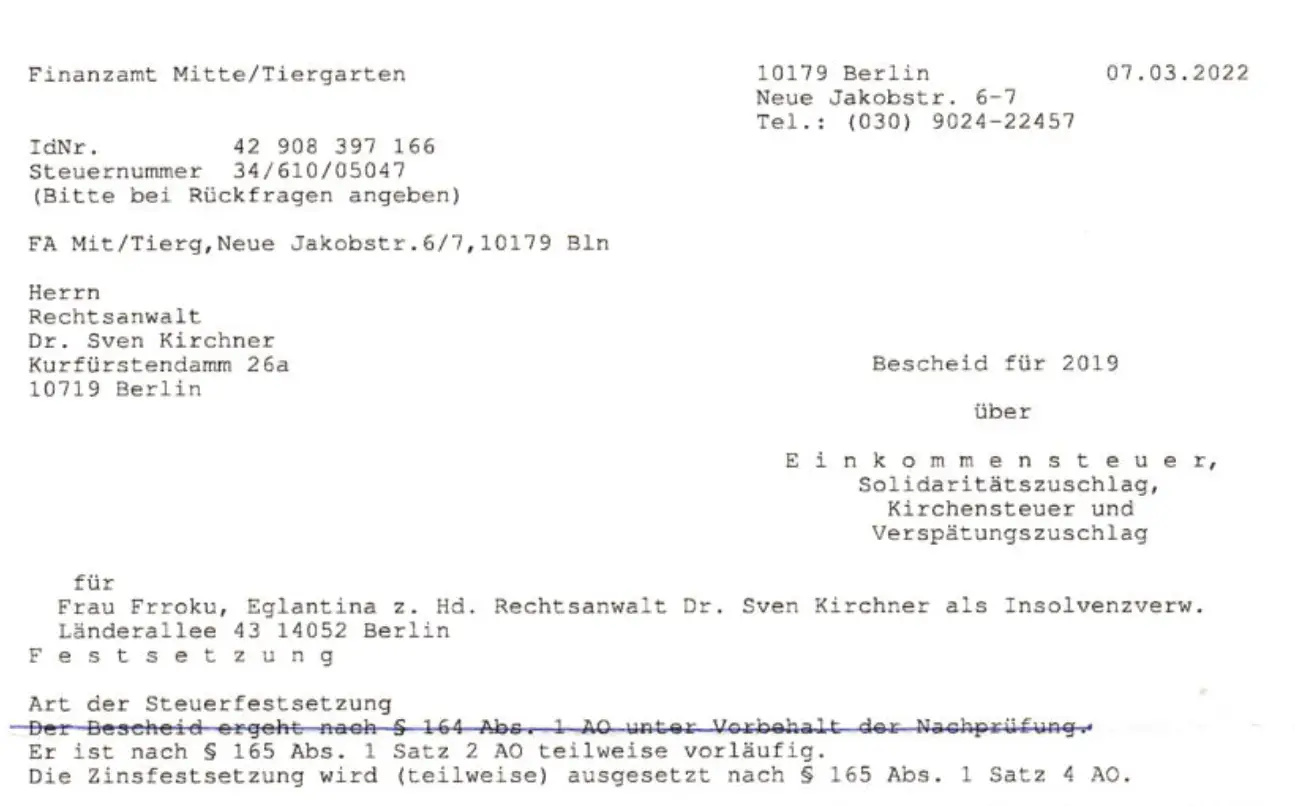
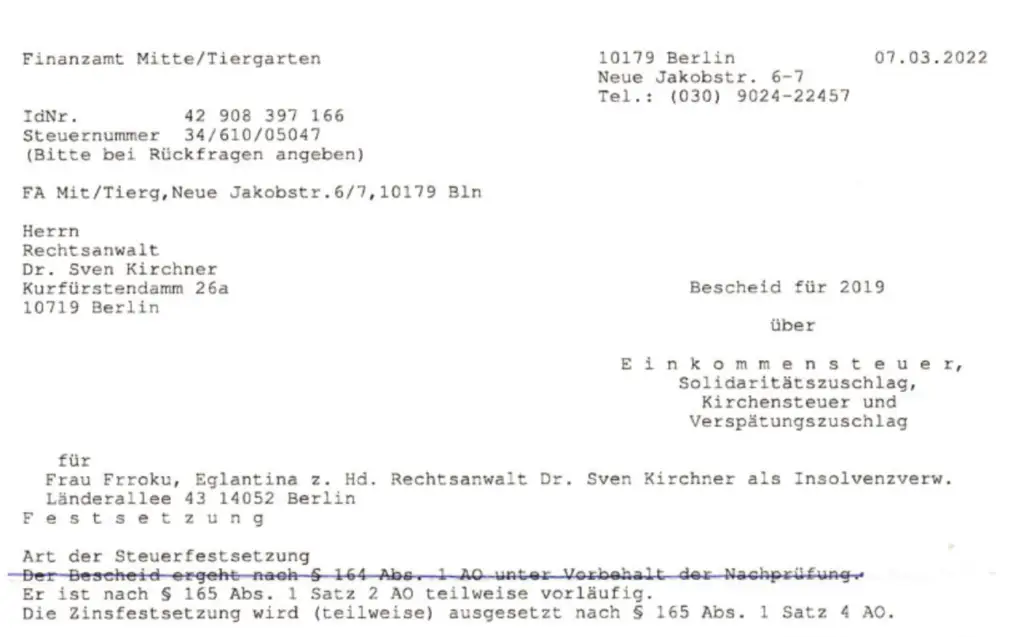
On December 23, 2021, insolvency proceedings were opened over the plaintiff’s assets, during which the defendant filed claims for health and long‑term care insurance contributions. Insolvency proceedings are expected to ensure proper management of assets, including the prompt correction of prior errors. During this period, the debtor loses economic autonomy and is effectively placed in a coercive situation.
Between the opening and the termination of the insolvency proceedings, the defendant committed serious errors, which are documented in detail in the subsequent chapters of the statement of claim.
The defendant itself noted on May 19, 2022, that no increase in assets was expected. Despite this confirmed lack of assets, the proceedings were not terminated until September 14, 2023—contrary to § 207 of the Insolvency Code, which requires immediate termination in cases of insufficient assets. Continuing the proceedings was therefore unlawful.
Had the proceedings been terminated promptly, the business “Eglantina Frroku,” which had been declared non‑viable as of February 24, 2022 (Negative Declaration under § 35(2) InsO), should have been returned to its owner. This would have allowed the plaintiff to rebuild her economic existence. The viability of her self‑employment had already been confirmed on May 11, 2022, by the Berlin Business Seniors Advisory Service, and she received financial support for business continuation from the Jobcenter Berlin Charlottenburg on July 27, 2022.
After the delayed termination of the insolvency proceedings due to insufficient assets on September 14, 2023, the defendant continued to enforce its claims and suspended the plaintiff’s insurance benefits—even though the administrative dispute had already been transferred from the Administrative Court to the Social Court.
The defendant justified its enforcement actions before the Administrative Court of Berlin on November 15, 2024 (Case No. VG 1 L 444⁄24), citing the opening of the insolvency proceedings on December 23, 2021, the denial of discharge of residual debt on July 29, 2022, the termination of the proceedings on September 14, 2023, and the insolvency administrator’s table extract and enforcement title dated December 27, 2023.
However, after these procedural errors, the defendant was not permitted to continue asserting claims based on the insolvency proceedings—nor to suspend benefits in order to force payment—especially after being informed that the Administrative Court had transferred the case to the Social Court.
Despite this, the defendant continued to issue demands, enforced them, and suspended the plaintiff’s insurance benefits. Ultimately, the plaintiff was forced to pay the claims on February 17, 2025, under coercion and without acknowledging their legitimacy.
The defendant’s actions violate the social law obligations of a public insurance institution. They did not serve debt regulation but instead resulted in targeted economic and social oppression. If the Social Court legitimizes this conduct, it would confirm a practice that detaches social benefits from their protective purpose and misuses them as an instrument of economic destruction.
The German Social State on Trial — The Injustice Chronicle
Original documents:
Statement of Claim (German original)
Further reading
https://injusticechronicle.com/ikk-classic-mass-deficiency